
Tree on your house, blocking the driveway, or into power lines? Call 612-532-9996 now. · Live answering · Same-day emergency response
Home › Tree Services › Emerald Ash Borer Tree Removal
ISA CERTIFIED ARBORISTS · MAPLE GROVE · MPLS · SINCE 2006
We do both, so we can give you the best service.
A company that only removes ash trees has a reason to tell you yours is too far gone. A company that only treats has a reason to tell you it can be saved. We do both. So instead of an opinion, here is the number the state publishes: below about 50 percent canopy loss, treatment usually works. Above it, it usually does not, and we will say so.
Free estimates. Licensed and insured. 4.8 stars across 133 Google reviews.
You’ll speak with our scheduling team, who will arrange a visit from a certified arborist, not a salesperson.
Send a photo of the whole tree from the street and one of the trunk. A certified arborist will tell you which side of the threshold it is on.
ISA Certified Arborist · TCIA Member · MN Tree Care Registry #20190969 · ★ 4.8 stars across 133 Google reviews · Licensed and insured · Serving the Twin Cities since 2006
Why We Will Not Push You
Ask a tree company whether your ash can be saved and the answer usually depends on what they sell.
If they only take trees down, “it is too far gone” is the easy call and it is worth several thousand dollars. If they only spray and inject, “we can save this” is the easy call and it is worth an appointment every two to three years for as long as you own the house. Neither of them is lying, exactly. They are just answering a question they have a stake in.
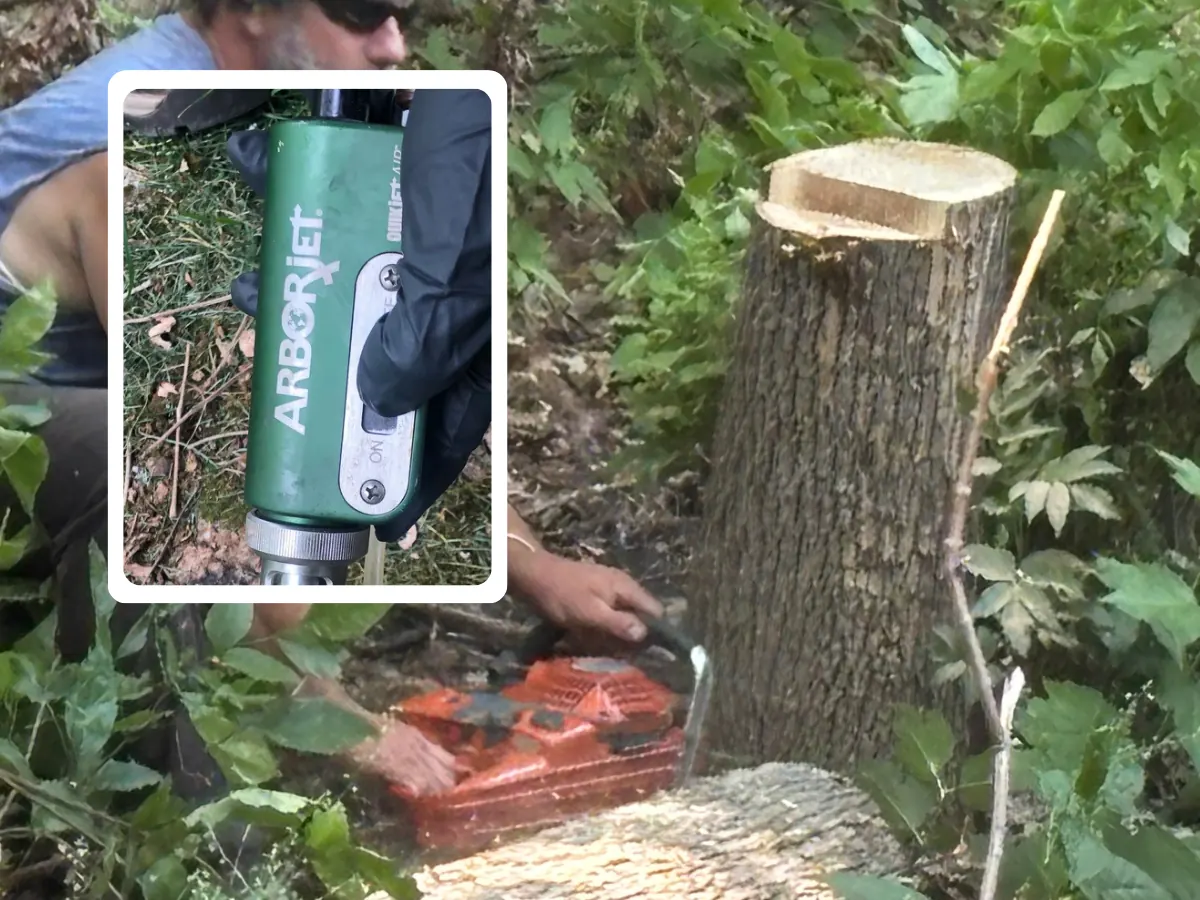
We inject ash trees, and we remove them. We do this so you have all the available options from a non-bias service provider.
And the decision is not a judgment call, because the state publishes the line. The Minnesota Department of Agriculture is unambiguous: do not treat trees showing more than 50 percent canopy decline, because those trees are unlikely to recover even if treated. So the assessment is a measurement, not an opinion, and you are welcome to look up the same guidance we are working from.
★★★★★
“He was also transparent with me about not spending another dime on one of my trees that appeared stressed and giving it a few years before deciding what to do with it, saving me from doing unnecessary or even harmful work on that tree.”
Courtney Barton · Google review
The Six Signs
These are the six signs the University of Minnesota Extension lists. We have put them in the order you are most likely to spot them from the ground.
1
The first symptom, and the one people miss because they are looking at the trunk. Bare branches in the upper crown while the lower canopy still looks fine.
2
Cracks running up and down the trunk. The tree is trying to heal over the galleries underneath, and the bark splits as it does.
3
Called epicormic shoots. A stressed ash pushes out growth low on the trunk where there was none. It is the tree trying to start over.
4
Woodpeckers strip the outer bark to get at the larvae, leaving pale patches. Often the most visible sign from a distance, and it means the larvae are already there.
5
About one eighth of an inch, flat on one side. Small, and they are proof rather than a warning: the adult beetles that made them have already left.
6
Winding tunnels in the outer sapwood, where the larvae fed. If a piece of bark comes away you will see them, and that is confirmation.
First, make sure it is actually an ash. Opposite branching, compound leaves with five to eleven leaflets, and diamond-patterned bark on a mature trunk. Plenty of trees get diagnosed with emerald ash borer that are not ash at all.
And the clock: an infested ash is usually dead in about four years, and it can be as little as two. That is Extension’s figure, not a sales line, and it is the reason this decision does not keep.
The One Number That Decides It
Below about 50 percent canopy loss: treat it. Trunk injection works and it is not close. The Minnesota Department of Agriculture puts the timing at May through September, while the canopy is full and the tree is not under heat or drought stress, and University of Minnesota Extension names May through late September as the workable season. Earlier in that range is better than later, but a call in August is not a wasted call.
Above it: take it down. The MDA’s wording is that trees showing more than 50 percent canopy decline are unlikely to recover even if treated. Spending on injection at that point buys you a slower death and a bigger bill.
Understand that treating is a commitment, not a cure. Injections repeat every two to three years for as long as emerald ash borer is in the area, which in this metro means indefinitely. A mature ash shading the south side of a house is usually worth that. A mediocre ash at the back of a lot usually is not.
The injection is not something you can do yourself. The most effective product is a restricted use pesticide, and Minnesota requires a licensed or certified applicator to apply it. There are soil-applied products a homeowner can buy, and they are meaningfully less effective on larger trees.
And a healthy ash is not a problem to be solved. University of Minnesota Extension puts it plainly: if you already have an ash tree in your yard and it is healthy, there is no reason to remove it.
Full detail on treatment, including what an assessment looks at, is on our tree health care page.
Why Early Is Cheaper
This is the part nobody explains, and it is the honest argument for not waiting.
Dead ash goes brittle. Extension’s wording is that once an ash tree is dead the branches become brittle, which makes it much more challenging and dangerous to cut down. A climber cannot trust the wood. Limbs that would flex on a live tree snap without warning.
And the beetle brings rot with it. Emerald ash borer carries several decay fungi that rot branches quickly, so the failure is not just dryness, it is active decay working from the inside.
What that means on your invoice. A dead ash often cannot be climbed safely. Where there is room to drop it, we fell it from the ground, which is the cheapest way this ever goes. Where there is not room, it becomes a crane or a lift job, which is what the backyard numbers below reflect. Either way, removing the same tree eighteen months earlier, while the wood is still sound, is usually cheaper and always safer.
There is also a season for it. Extension recommends removing ash between November and April, which lowers the chance of moving the beetle around while the adults are flying. It is also our quieter season, so the schedule is better and so is the ground: frozen turf takes equipment far better than a wet April lawn.
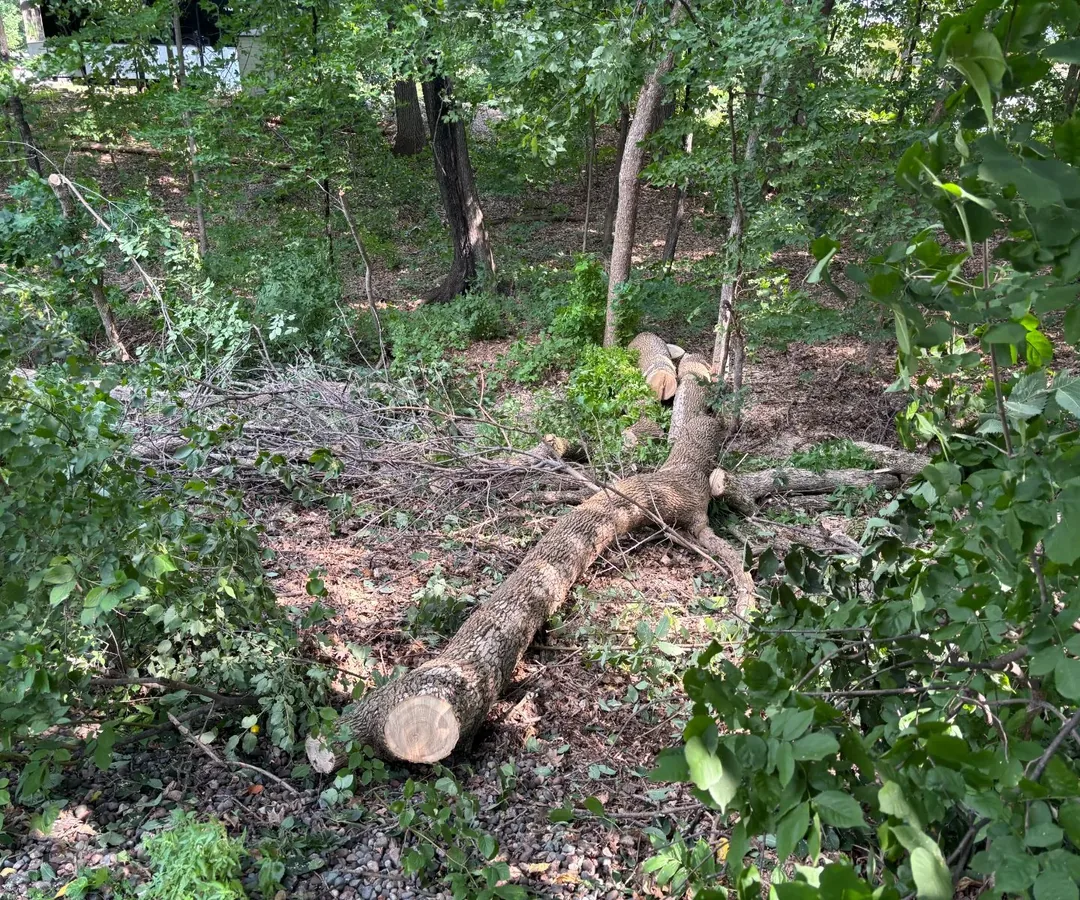
This one came down while the wood was still sound. That is the cheaper, safer version of this job, and the reason to decide early.
What Drives the Price
An ash removal is priced like any other removal, on size and access. We publish those ranges on our tree removal pricing page, and the worked example there is a 45-foot ash in Minneapolis:
Front yard, easy access
$800 to $1,200
Side yard, fences or obstacles
$1,500 to $4,000
Backyard, no equipment access
$7,000 to $8,000
Backyard, crane usable
around $3,500
Two things specific to ash move that number.
Whether it is still alive. A sound tree can be climbed, which keeps the options open. A dead brittle one usually cannot, so it has to be dropped whole where there is room or craned where there is not. This is the single biggest reason to decide early.
Whether there are several. Ash grow in groups, especially along back property lines and in wooded lots. Four ash on one visit costs considerably less than four visits.
What to Expect
Free, and it ends with a number rather than an adjective.
What treating costs on a cycle, and what removing costs once. Including the case where the answer is to do nothing this year.
May through September, while the canopy is full and the tree is not under heat or drought stress.
November through April where the tree can wait that long, and immediately where it cannot.
★★★★★
“He was also transparent with me about not spending another dime on one of my trees that appeared stressed…”
Courtney Barton · Google review
★★★★★
“I was told by 2 landscaping companies that they would have to be cut down, but they now look like they are on the way to recovery.”
Judy Lemke · Google review
★★★★★
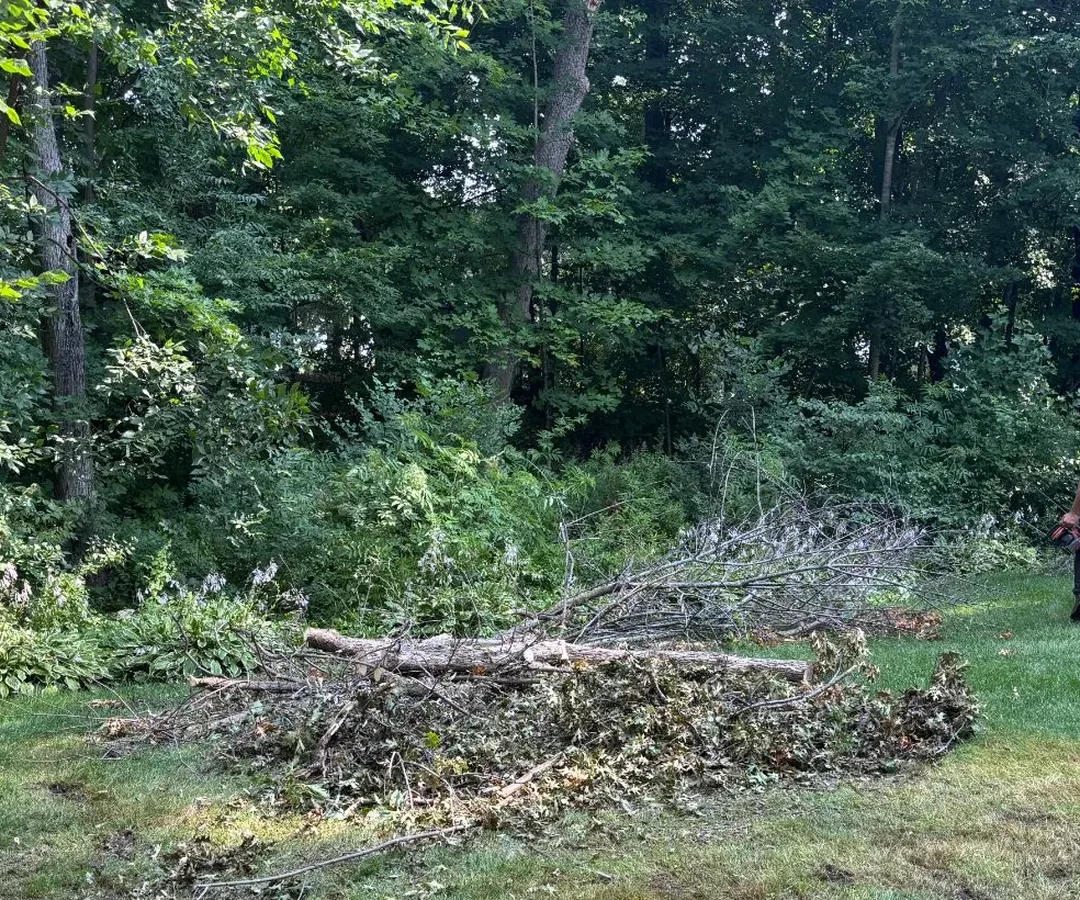
“They left our yard in better condition than it was before the project started.”
Mike Anderson · Google review
Read all 133 Google reviews
Opposite branching, compound leaves with five to eleven leaflets, and a diamond pattern in the bark of a mature trunk. Mountain ash is not a true ash and is not affected. If you are not sure, a photo of the whole tree and one of the trunk usually settles it.
If it has lost more than about half its canopy, yes, and the Minnesota Department of Agriculture says so directly: those trees are unlikely to recover even if treated. Below that threshold, injection works.
The Minnesota Department of Agriculture puts the timing at May through September, while the canopy is full and the tree is not under heat or drought stress. University of Minnesota Extension names May through late September. Earlier in that range is better, but a call in August is not a wasted call.
Every two to three years, for as long as emerald ash borer is in the area. That is why the honest comparison is the ten-year cost of treating against the cost of removing the tree once.
Not with the trunk injection. The most effective product is a restricted use pesticide and Minnesota requires a licensed or certified applicator. Soil-applied products are available to homeowners and are meaningfully less effective on larger trees.
Usually about four years, and sometimes as little as two. That is the University of Minnesota Extension figure, and it is why this decision does not keep.
No. University of Minnesota Extension is explicit that a healthy ash in your yard is not a reason for removal. Watch the top of the canopy each spring, and treat if and when it starts.
Because dead ash goes brittle and the beetle brings decay fungi with it, so the wood cannot be trusted under a climber. Where there is room we fell it from the ground. Where there is not, it becomes a crane or lift job. Deciding eighteen months earlier is cheaper and safer either way.
November through April where the tree can wait. University of Minnesota Extension recommends it to reduce the chance of moving the beetle while adults are flying, and frozen ground is easier on your lawn.
The full treatment offer, including what an arborist actually looks at before recommending anything.
Where a dead brittle ash usually ends up, and often the cheaper option.
Free assessment from a certified arborist.
Option for you to choose, with us sometimes telling you to leave it alone.
Loading the form…
We do both. Ask us which one.
Loading the estimate form…