
Tree on your house, blocking the driveway, or into power lines? Call 612-532-9996 now. · Live answering · Same-day emergency response
Home › Ice Dam Removal
ISA CERTIFIED ARBORISTS · MAPLE GROVE · SINCE 2006
We can take the ice off today. Nothing we sell will stop it coming back.
Low-pressure steam, which melts the dam off instead of breaking it off. No chipping, no hammers, no pressure washer, no salt. And once it is off, we will tell you why you got one, which is almost always heat escaping into your attic. That is not a roof problem and it is not something we sell.
Water coming through the ceiling? Call. Licensed and insured. 4.8 stars across 133 Google reviews.
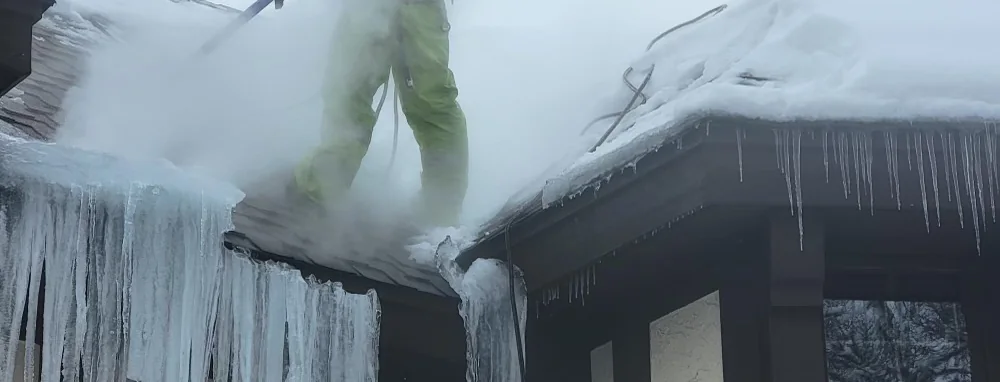
Send a photo of the eave. We will tell you what you are looking at, and whether it needs steaming today.
ISA Certified Arborist · TCIA Member · MN Tree Care Registry #20190969 · ★ 4.8 stars across 133 Google reviews · Licensed and insured · Serving the Twin Cities since 2006
Before You Call Anyone
Four things, in this order, and the first three do not involve us.
Buckets, towels, and move anything that matters. Water tracking along a ceiling joist can surface a long way from where it got in.
A bulge is a bag of water and it is coming down either way. The Red Cross says to poke holes starting at the outside of the bulge, because striking the center can bring the whole ceiling down at once. Use something long so you are not standing under it, wear eye protection, and kill the power to that circuit first, because ceiling water and light fixtures tend to find each other. If that does not sound like you, leave it alone and say so when you call.
Sudden water damage from an ice dam is often covered, but “often” is doing work in that sentence and your policy is the only thing that settles it. Starting the claim early is free.
We steam the dam off and clear the snow above it, so this one does not build straight back while you are dealing with the inside.
And one thing not to do: do not get on the roof. OSHA’s hazard alert on rooftop snow removal opens with the reason: “Every year, workers are killed or seriously injured while performing snow or ice removal from rooftops and other building structures, such as decks.” That is trained crews with equipment. It also says not to use a rake or shovel while standing on a ladder, which is the exact thing this job tempts you into.
The Method
We use low-pressure steam. It melts the ice off the roof rather than breaking it off. A 2 to 3 person crew works the dam down section by section, and we make sure the water it produces is diverted somewhere it cannot cause more damage.
We also clear the snow above the dam. This is the part most people skip. If the snow stays, the same heat loss melts it, the same water runs down, and the dam comes back. Removing the ice without removing the snow above it is a service call you may well be making twice.
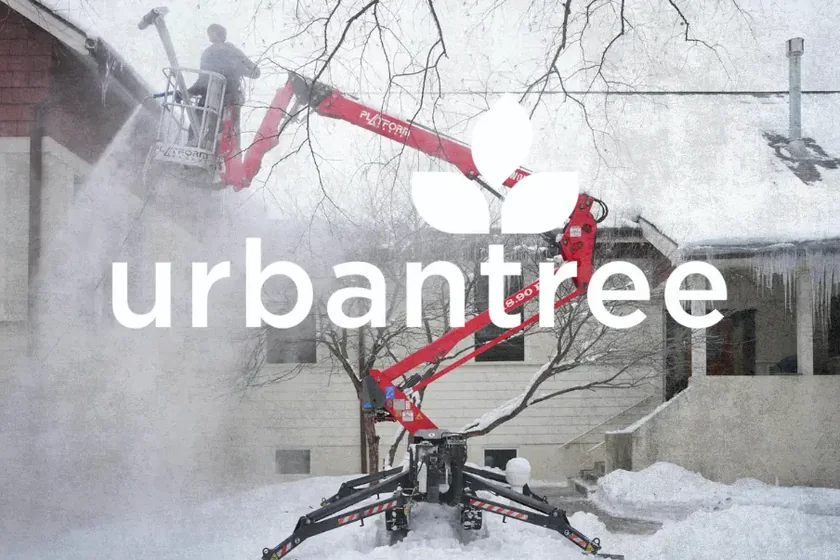
A tracked lift reaches the eave without a ladder on ice. The crew works the dam down section by section.
What the alternatives actually do:
The Asphalt Roofing Manufacturers Association is direct about this: “Extreme caution must be taken when removing snow from the roof so that the shingles are not damaged by shovels, scrapers, or foot traffic.” Crack one and the leak you were trying to stop gets bigger, and you find out in spring.
Enough force to get under the shingle course and drive water where the ice was not going, plus everything wrong with a ladder on ice. A pressure washer is a different machine from a steamer wearing a similar word.
Melts a narrow channel and that is all. University of Wisconsin Extension’s ice control table lists both rock salt and calcium chloride as “injurious to plants” and “highly corrosive”, so it costs you gutters, flashing, fasteners and whatever is planted underneath.
They do nothing to a dam that already exists: they heat the ice they touch and not the ice they cannot reach. Minnesota Commerce does not recommend them as prevention either. “Installing heating cables will shorten the life of your roof and cost you money to operate.”
Force is the common thread. Every method above gets the ice off by breaking it, and a frozen roof breaks too.
Not Our Opinion
The Minnesota Department of Commerce publishes ice dam guidance for homeowners, in a news release and in its Home Energy Guide. We are quoting it rather than paraphrasing it, because it names the method we sell and rules out three of the four things people try first, and it has nothing to gain either way.
“If you have an ice dam that is already causing water damage to your interior ceilings and walls, hire a professional ice dam removal service that uses steamers.”
“One way to prevent ice dams is by removing snow from your roof. While you can try to do it yourself with a snow rake, it may be best to hire a professional snow remover, especially if it takes getting on the roof or using a ladder.”
“The best prevention is to seal leaks with caulking or expanding spray foam, with attic insulation installed to a minimum of R-50 as space allows.”
“They will shorten the life of your roof and add to your energy costs.”
“These can damage shingles, gutters and other building components.”
“They will not eliminate ice dams and often make the problem worse.”
One of those says “or heat”, and steam is heat. We are not going to skip past that. Both sentences are in the same release: do not remove ice with chippers, chemicals or heat, and hire a professional ice dam removal service that uses steamers. The way we read it, the warnings are about what a homeowner should not do to their own roof, and the steamer line is what to hire instead. That is our reading and we will say so rather than quote you half a page.
Every one of those six is something this page tells you somewhere else, and four of them you have already read. The state’s version is here so you do not have to take ours.
The Part We Do Not Sell
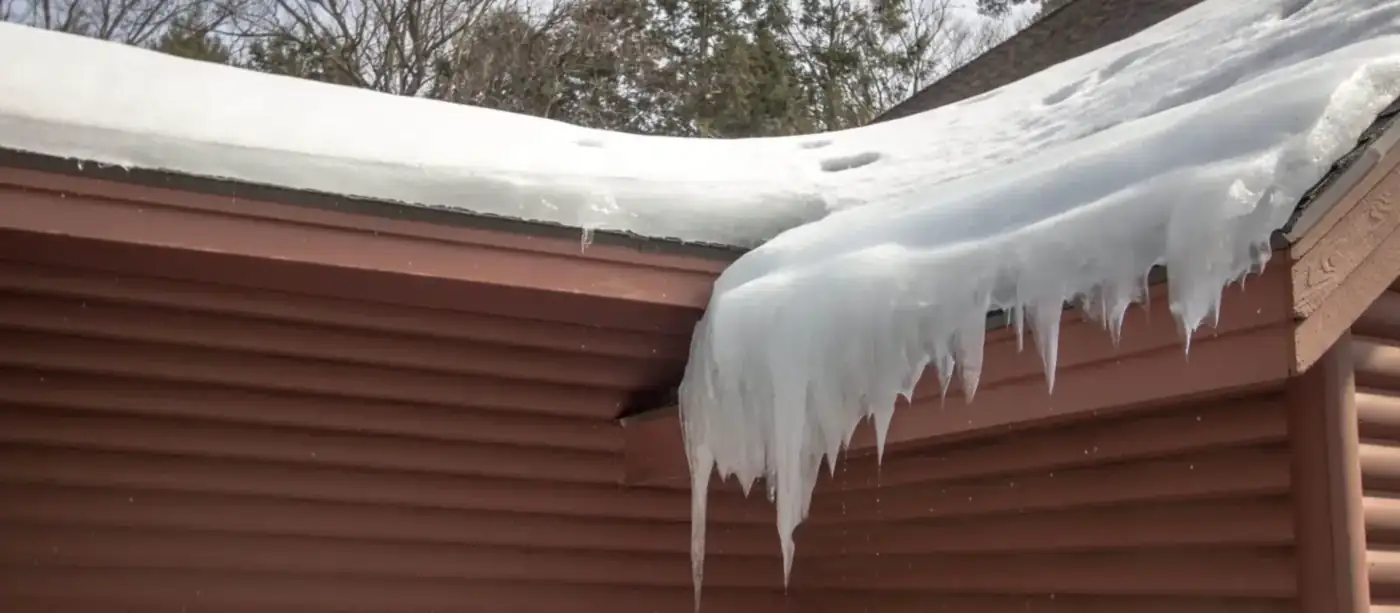
Ice packed along the eave. This is the dam.
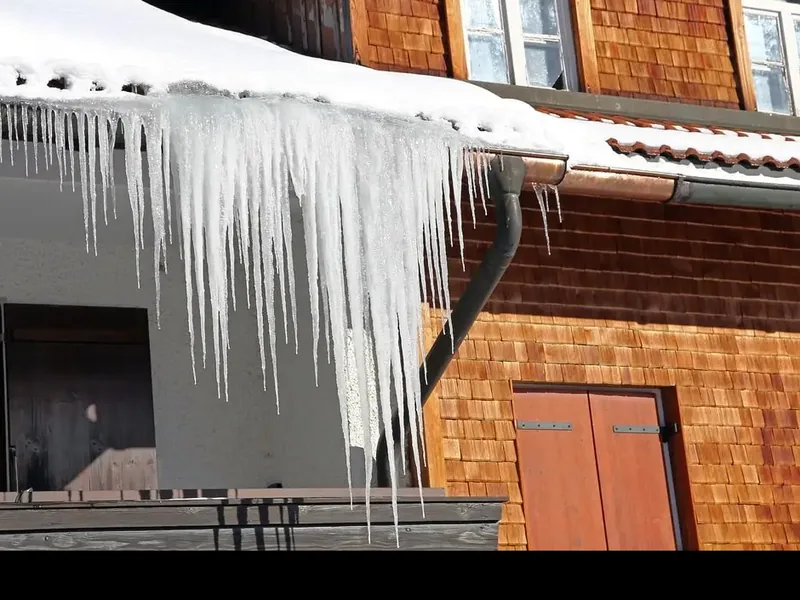
The icicle curtain. This is the symptom, and it is the part you can see.
Warm air leaks out of the house into the attic. It warms the underside of the roof deck. The snow sitting on the warm part of the roof melts, the water runs down to the overhang, which is cold because there is no house under it, and it freezes there. That ridge of ice is the dam. Water pools behind it, and pooled water goes under shingles, which are designed to shed water running downhill and nothing else.
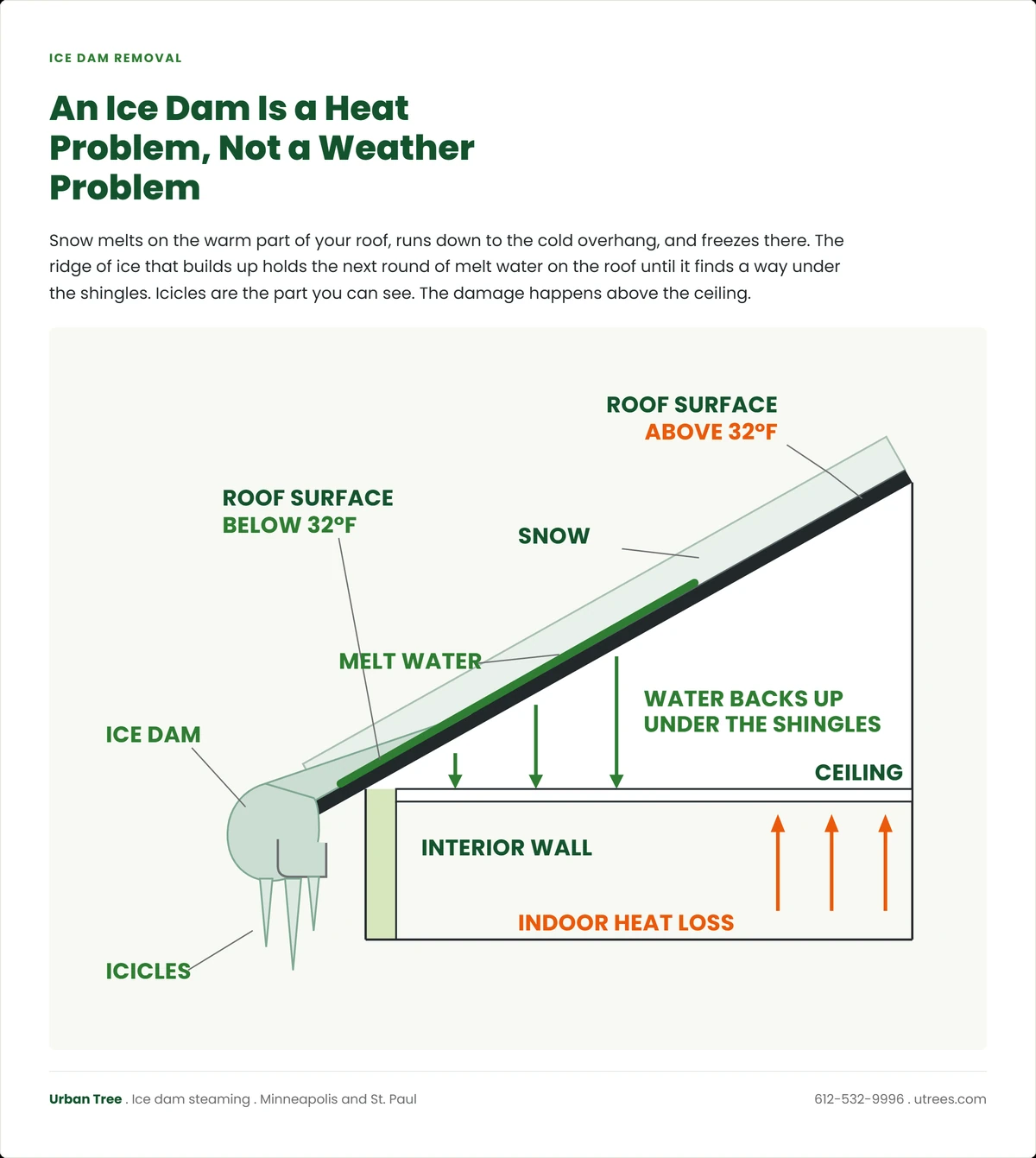
The US Department of Energy’s Building America program names three conditions: snow on the roof, a poorly air-sealed or poorly insulated attic, and freezing temperatures. Only one of the three is out of anybody’s hands. We can take the snow off, and University of Minnesota Extension says doing that “eliminates one of the ingredients necessary for the formation of an ice dam.” An insulation contractor can fix the attic. Nobody can fix January.
The permanent fix, in the order the federal guidance gives it:
“The most important step is to seal all of the air leaks from the conditioned space into the attic space to keep warm air from entering the attic in the first place.” Recessed lights, bath fans, the top plates of walls, the attic hatch, plumbing and wiring penetrations.
Insulation over a leaky ceiling slows the heat down without stopping it. Air sealing first is why the order matters.
The federal wording is “the three best ways builders can combat ice dam formation,” and for a roof being framed it asks for a two-inch air gap above the insulation. On a house that already exists, Minnesota Commerce is blunt: “Do not add roof vents, including powered vents. They will not eliminate ice dams and often make the problem worse.” University of Minnesota Extension gets to the same place from the other side: do the first two properly and “only small amounts of roof ventilation are needed.” So: air sealing and insulation are the retrofit. Vents are not.
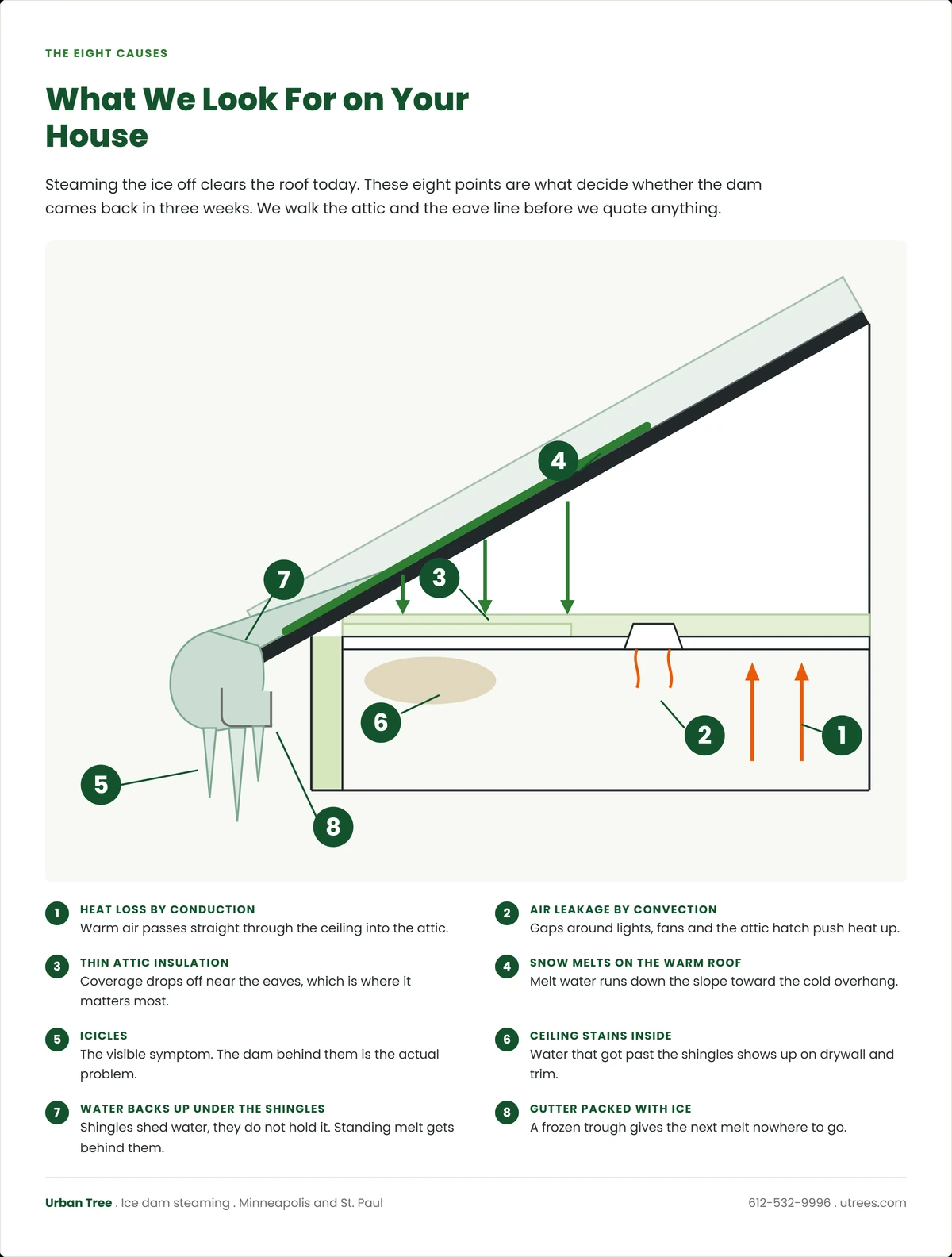
We do not do any of that, and we are not going to pretend the steam fixed it. What we will do is tell you what we saw, so that when you call an insulation contractor you already know what to ask for.
And the thing that surprises people: ice dams can form with as little as two inches of snow on a roof. It is not about how much snow. It is about how much heat.
What to Expect From a Claim
We are not insurance advisers and this is not advice about your policy. What follows is the general shape of it, and your own policy and adjuster are the only things that decide.
Sudden water damage from an ice dam is frequently covered under a standard homeowner’s policy. The Insurance Information Institute lists ice dams among the winter perils standard policies pick up, with the general expectation that the homeowner took reasonable steps to prevent the loss.
Two things get argued. Whether the removal itself is a covered cost or ordinary maintenance, and whether you acted once you knew. Most policies carry a condition requiring you to protect the property from further damage, which is the practical reason to start the claim on the same day rather than after the ceiling dries out and you have no photographs.
What we can give you: photographs of the dam before and after, a written scope of what we did, and an invoice. That is the documentation an adjuster asks for, and it costs nothing to have it.
What Drives the Price
A tree removal can be quoted from a photograph, which is why we publish the ranges on our tree removal page. An ice dam cannot. Some of what moves the number you can see from the street. The rest of it, including how much ice there actually is and how thick, nobody knows until the crew is up there.
What moves it:
A dam across one twenty-foot eave and a dam wrapping three sides of the house are different jobs.
A thin glaze and a dam a half-foot deep are different amounts of work, and thickness is one of the things nobody can judge from the ground.
A single-storey ranch and a steep three-storey with dormers are not comparable, and pitch decides how the crew can work at all.
Where the truck can park, how far the hose has to run, and whether the ground under the eave can be reached.
It usually does. It is what stops this dam re-forming from the snow that is up there now.
Valleys and dormers collect ice and each one is its own small job.
★★★★★
“Gabe was quick to respond to our concerns regarding ice dams on our roof and had a crew out the following morning.”
Google review
★★★★★
“He was also transparent with me about not spending another dime on one of my trees that appeared stressed…”
Courtney Barton · Google review
★★★★★
“They left our yard in better condition than it was before the project started.”
Mike Anderson · Google review
Read all 133 Google reviews
Call and ask, because it depends entirely on what the week has been doing. Winter is a quiet season for tree work, but the week after a January thaw is the one week it is not. If water is coming into the house, say that when you call.
Not when it is done with the right machine. A true low-pressure steamer melts the ice off rather than breaking it off, which is why the Minnesota Department of Commerce tells homeowners to “hire a professional ice dam removal service that uses steamers.” The damage comes from the alternatives: chipping at brittle shingles, or a pressure washer, which is a different machine wearing a similar word.
Please do not, and the reason is the fall rather than the roof. OSHA’s hazard alert on rooftop snow removal opens with it: “Every year, workers are killed or seriously injured while performing snow or ice removal from rooftops and other building structures, such as decks.” That sentence is about trained crews on the job, which is rather the point. It also says not to use a rake or shovel while standing on a ladder, which is exactly what this job tempts you into. The roof damage is the second problem, not the first.
They melt a narrow channel and that is all they do. Minnesota Commerce’s advice is “do not remove ice with chippers, chemicals or heat,” and University of Wisconsin Extension lists rock salt and calcium chloride as “injurious to plants” and “highly corrosive”. You trade a roof leak for damaged gutters, flashing and whatever is planted underneath.
Not from the snow that is up there now, because we take that off with the dam. The next real snowfall starts the same process, because the heat loss has not changed. The permanent answer is air sealing and insulation in the attic, and that is a different trade.
No. We will tell you what we saw from the roof and what to ask an insulation contractor for, and that is where our part ends.
The water damage inside frequently is: the Insurance Information Institute lists ice dams among the winter perils standard homeowner’s policies pick up. Whether the removal itself is covered is the part that gets argued. Your policy and your adjuster decide, so call them the same day, and we will give you photographs and a written scope for the claim.
Icicles are the symptom, and they come off with the dam. If there is a dam behind them, the icicles are the part you can see and the dam is the part doing the damage.
Ask. Clearing the snow above a dam is part of every removal we do. Whether we will come out for snow alone depends on the week.
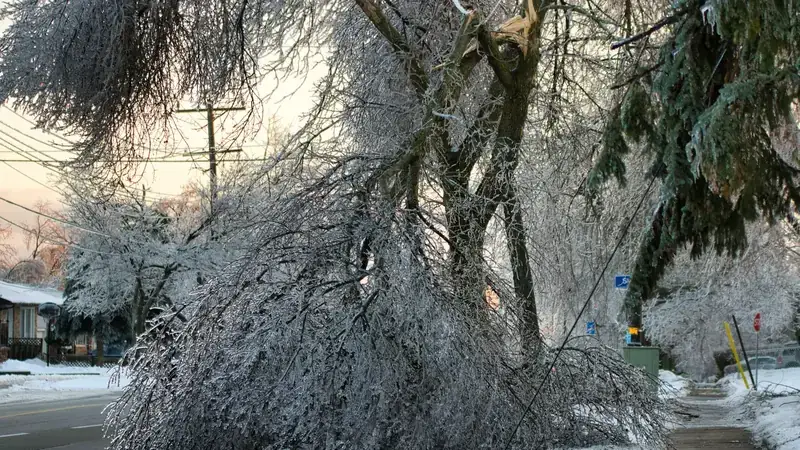
What an ice storm does to a tree. Ice loading is why winter storm calls come in.
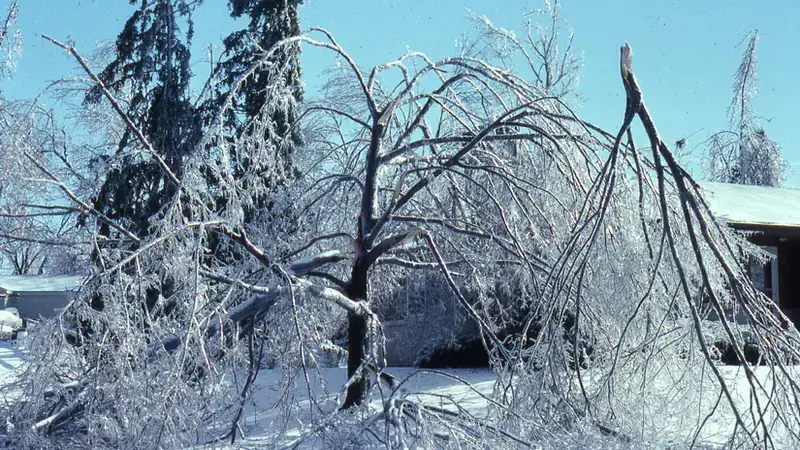
Failed limbs after a glaze event. This is an emergency tree call, not an ice dam.
Winter is our best pruning season, because the trees are dormant and we can see the structure without leaves in the way.
Diagnosis and treatment when the problem is the tree’s health rather than its shape.
Low-pressure steam, snow cleared above the dam, photographs and a written scope for your insurer, and an honest answer about what actually fixes it.
We will take the ice off. Then we will tell you the truth about why it was there.
Loading the estimate form…