Crane Tree Removal in the Twin Cities

When your tree needs a crane, you probably braced for a nightmare bill.


Here’s the truth: cranes are often the cheaper, safer way to get the tree down — not the most expensive one.

Most homeowners hear “you’ll need a crane” and think the worst. After thousands of removals across the Twin Cities, we’ve learned the opposite is usually true. 
 
A crane doesn’t just make a job safer — most of the time it makes it less expensive, and it spares the lawn you paid good money to have.
 
Led by an ISA Certified Arborist, Urban Tree brings the right machine to the right tree, and tells you straight when you need one and when you don’t.
 
Get a free crane removal estimate → (612) 532-9996


The two questions we ask before we recommend a crane

Before we ever quote a crane, we’re answering two questions for you:

  1. How much safety does it add — to people and to your property? Some trees are simply too big, too dead, or too close to your house to take down any other way.
  2. Will it save you money and time? On a surprising number of jobs, the crane is the less expensive route once you account for labor hours and the damage it prevents.

On most jobs the answer to at least one is a clear yes. On some, the crane is the only responsible option — and we’ll tell you that plainly rather than quote you a cheaper job we shouldn’t do.

First, what "crane" actually means.

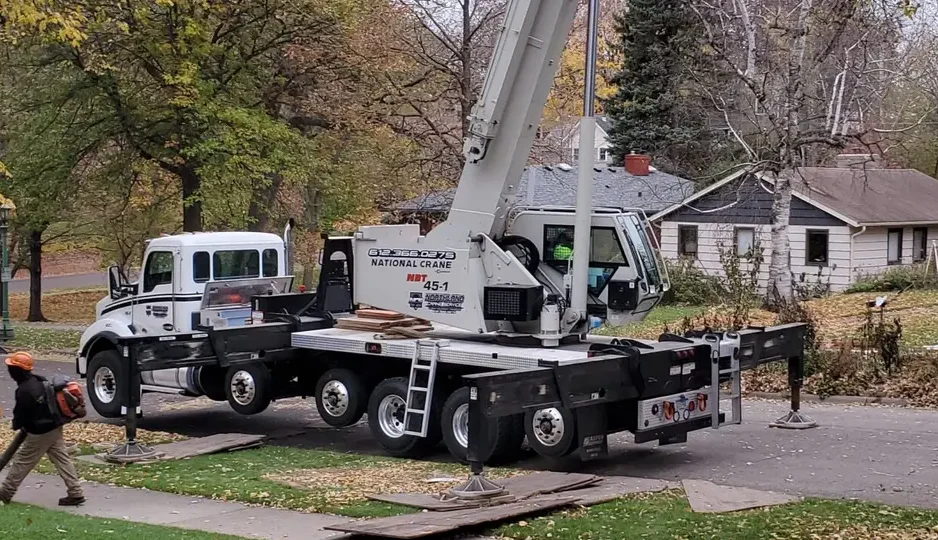
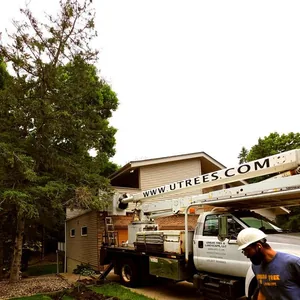
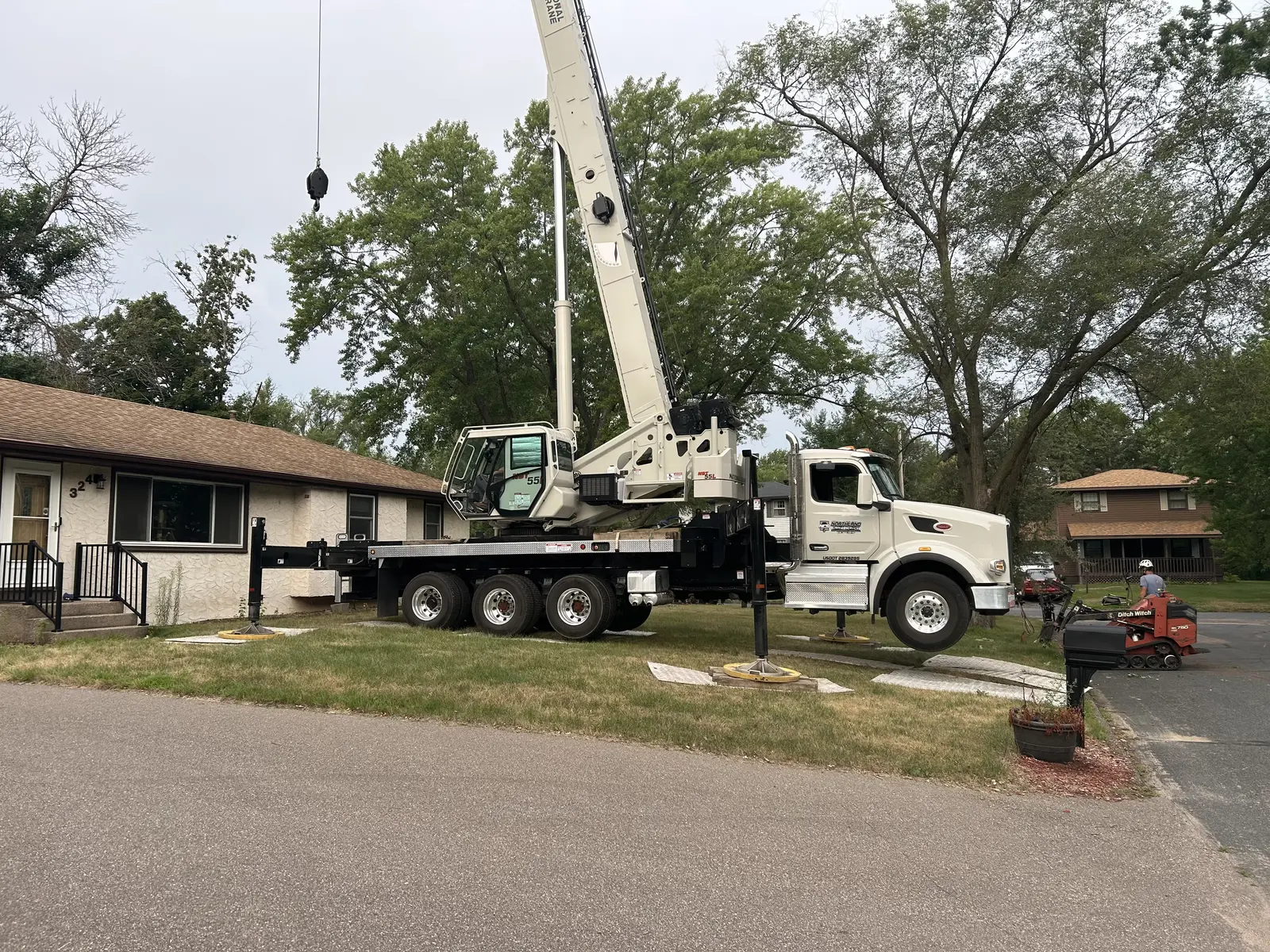
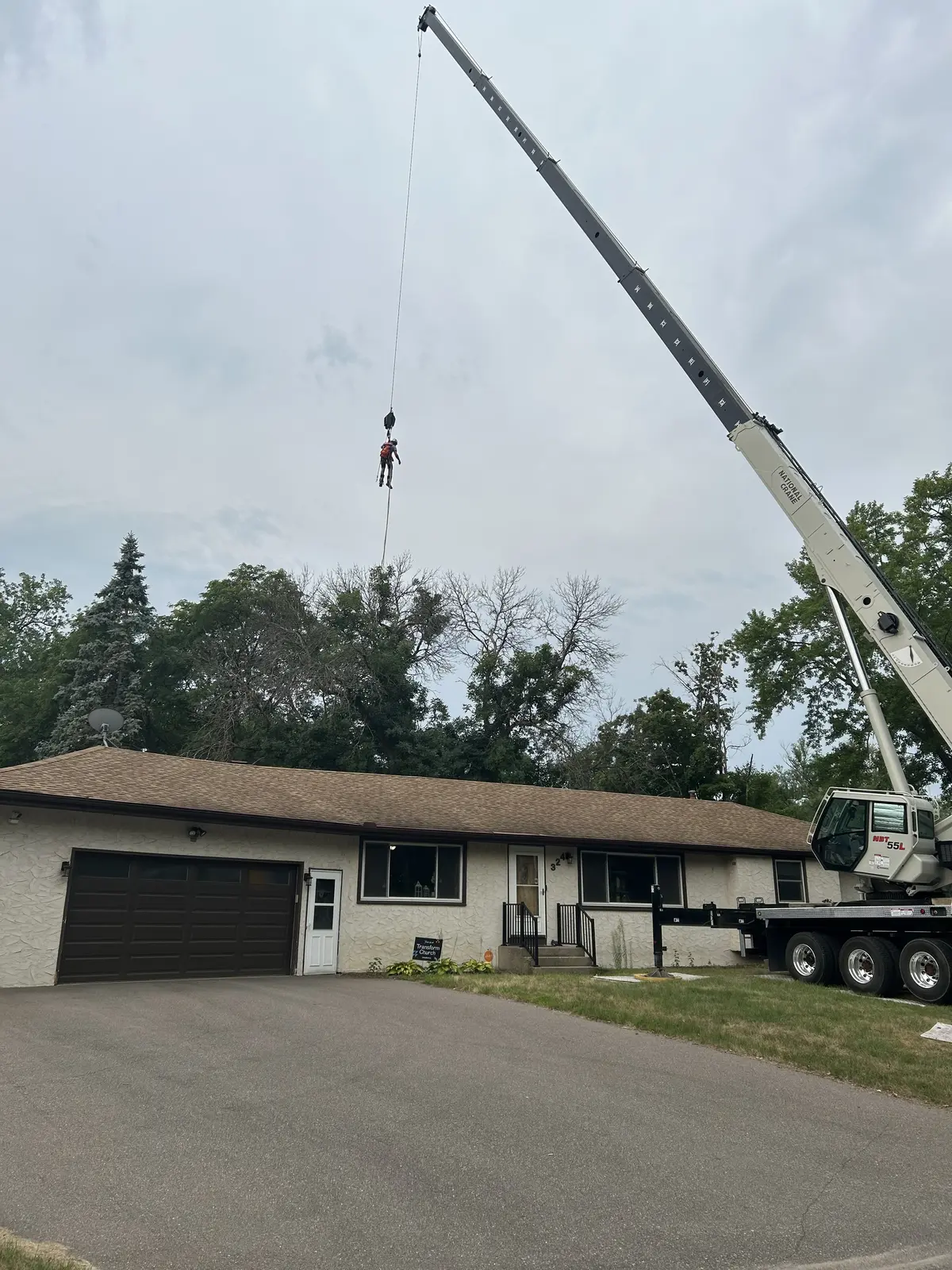
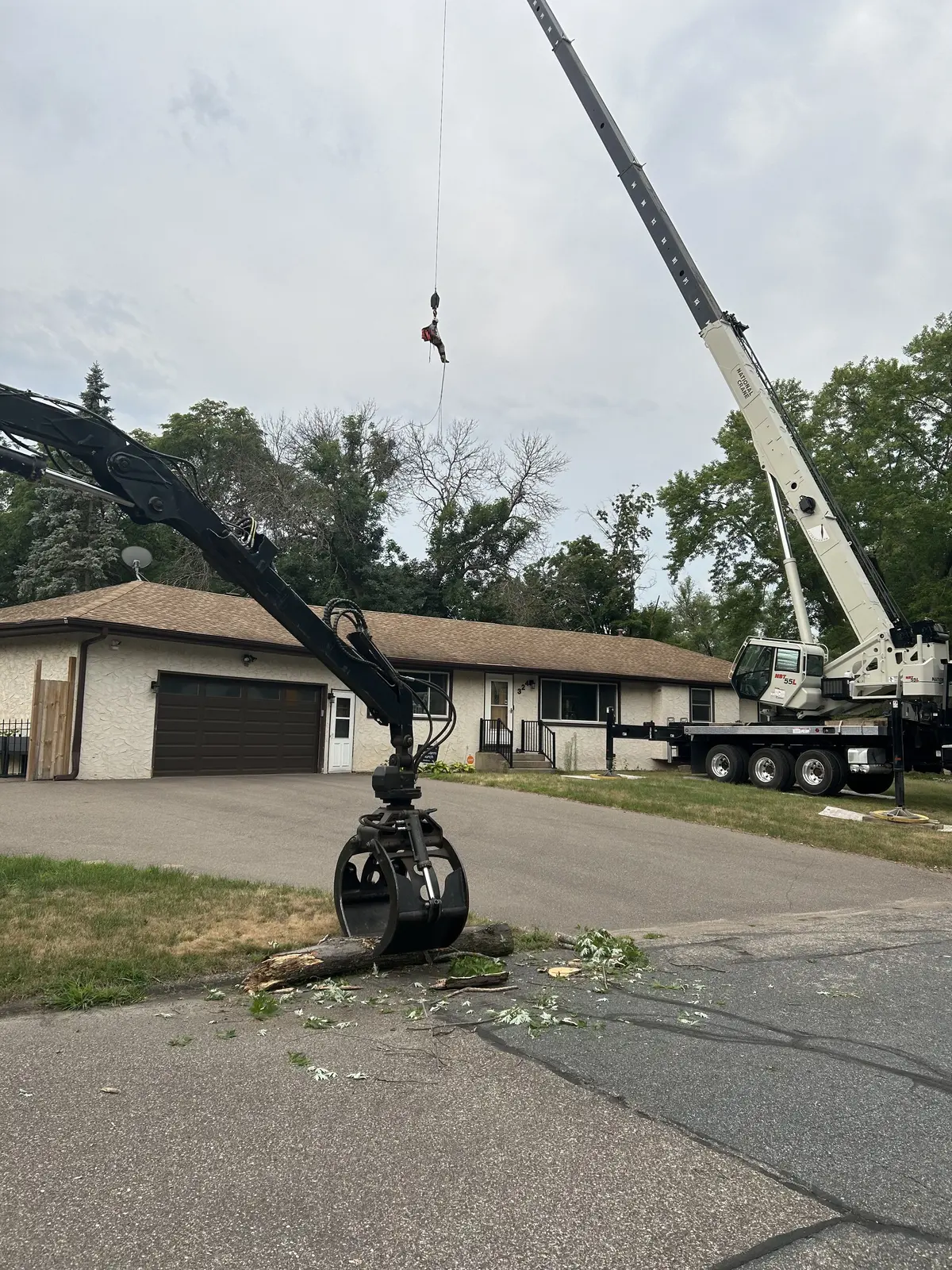
There’s a technical distinction worth knowing. The vast majority of our crane work is done with a boom truck, (see above) — a 45-, 55-, or 60-ton truck that drives to your site, drops its outriggers, and is set up and ready in about 15–20 minutes. A true crane is a larger rig that sets up in the street with counterweights; we bring one in for the biggest jobs.

Either way, it’s a serious piece of equipment — and that’s the entire point. One machine does the work of several crew members in a fraction of the time. That’s where the value comes from.

Why a crane usually costs less, not more .

Here’s the math most people never see.

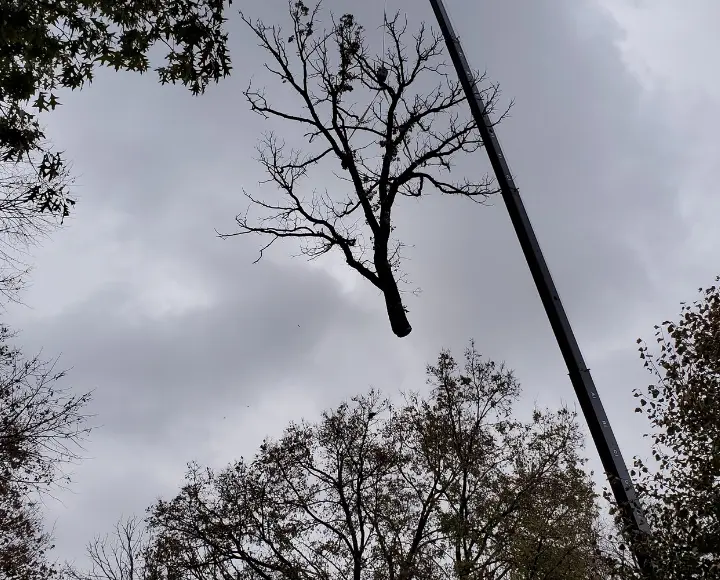
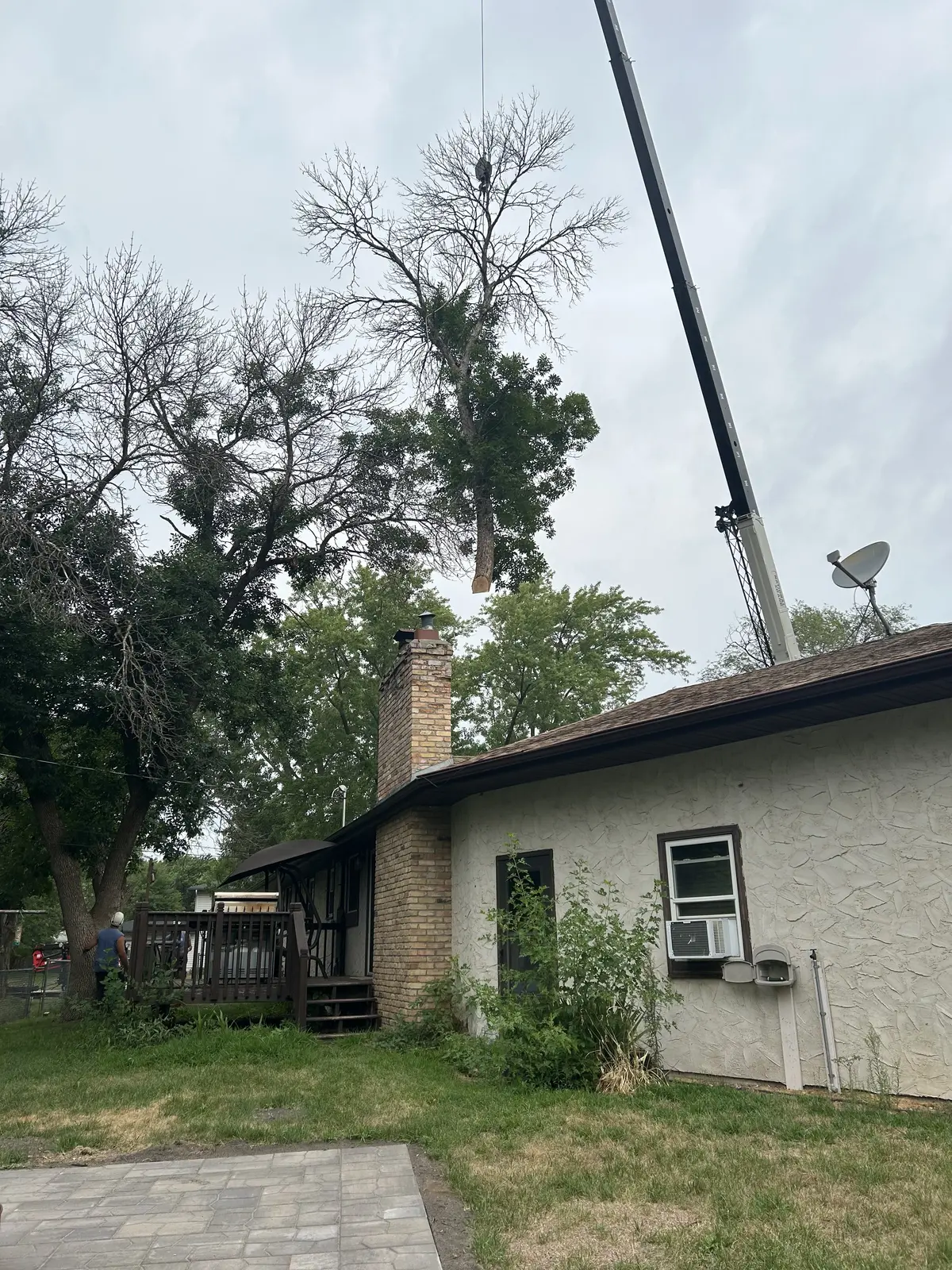
A crane pivots whole sections of tree — 2,000+ pounds at a time — straight from the canopy to a clear drop zone. Without it, those same logs (often 4,000 to 7,000 pounds) have to be lowered to the ground, cut into roughly 1,000-pound pieces, and carried out by hand, one at a time, by a crew of two or more. That’s where the hours stack up. And hours are exactly what you’re paying for.

Think of it like moving two dump-truck loads of landscaping rock to your backyard. You can do it one wheelbarrow at a time — it’s been done that way forever, and sometimes it’s the only option. Or a skid steer scoops eight wheelbarrows’ worth in a single pass, in about ten seconds, with one operator. Same job, a fraction of the time and effort. A crane does that for your tree.

The real-world result: a removal that runs around $8,500 with a crane often runs closer to $12,000 done by hand — and leaves you with a torn-up yard on top of the bill. Most of our crane jobs save the customer $2,000 or more.

Either way, it’s a serious piece of equipment — and that’s the entire point. One machine does the work of several crew members in a fraction of the time. That’s where the value comes from.

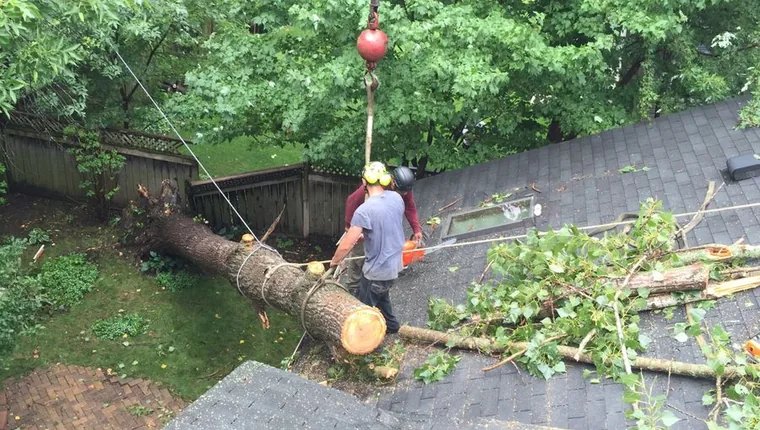
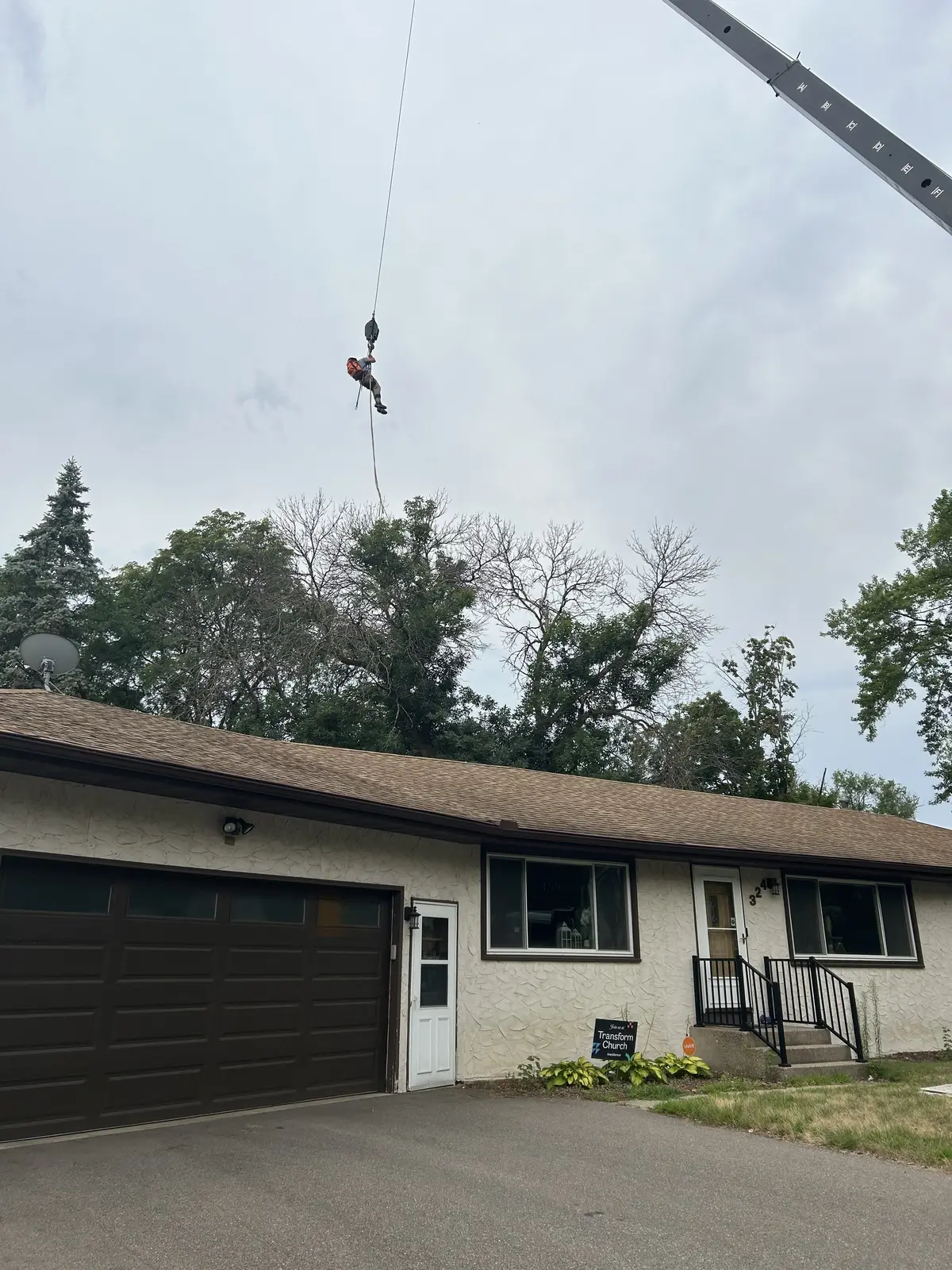
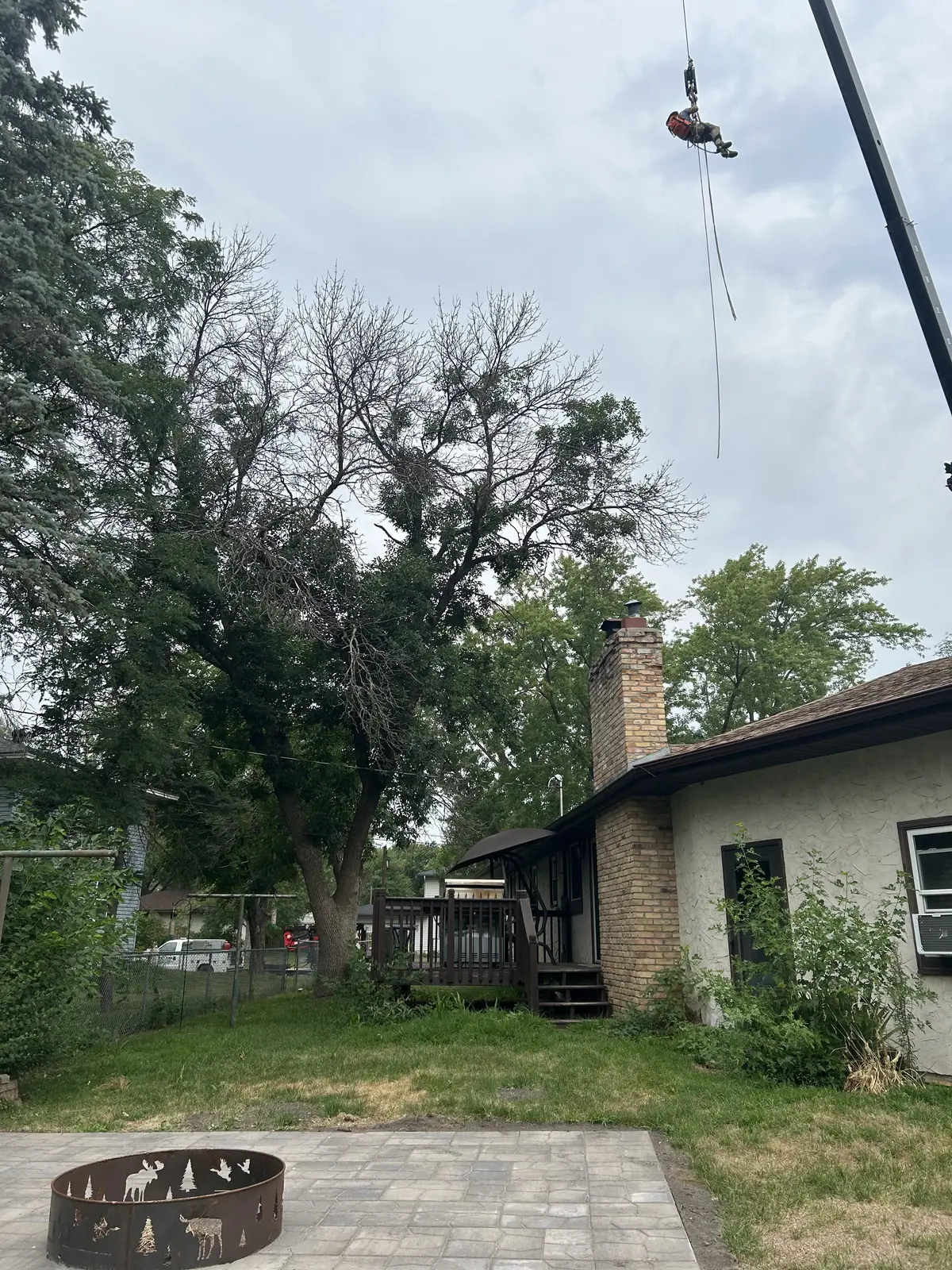
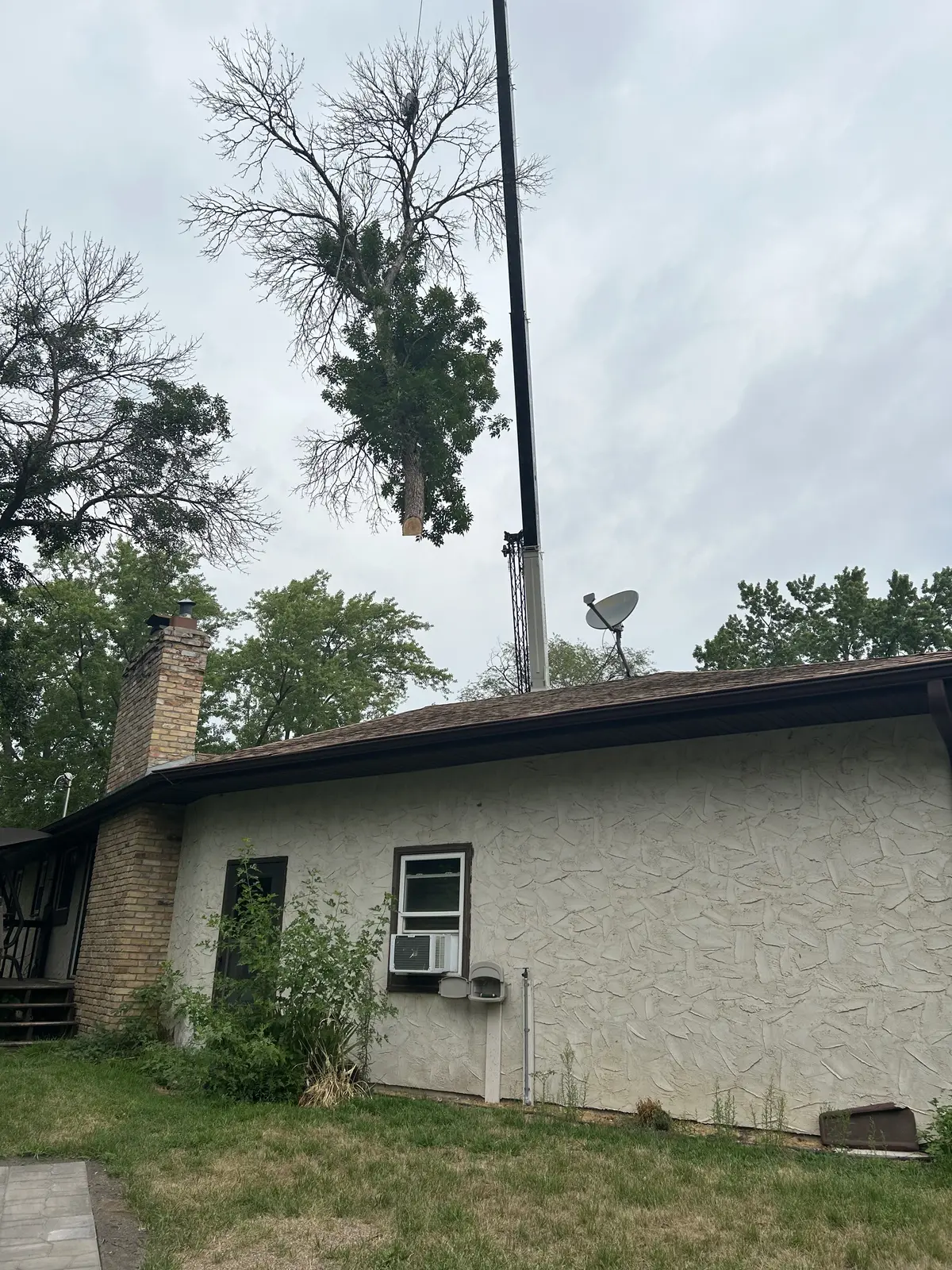
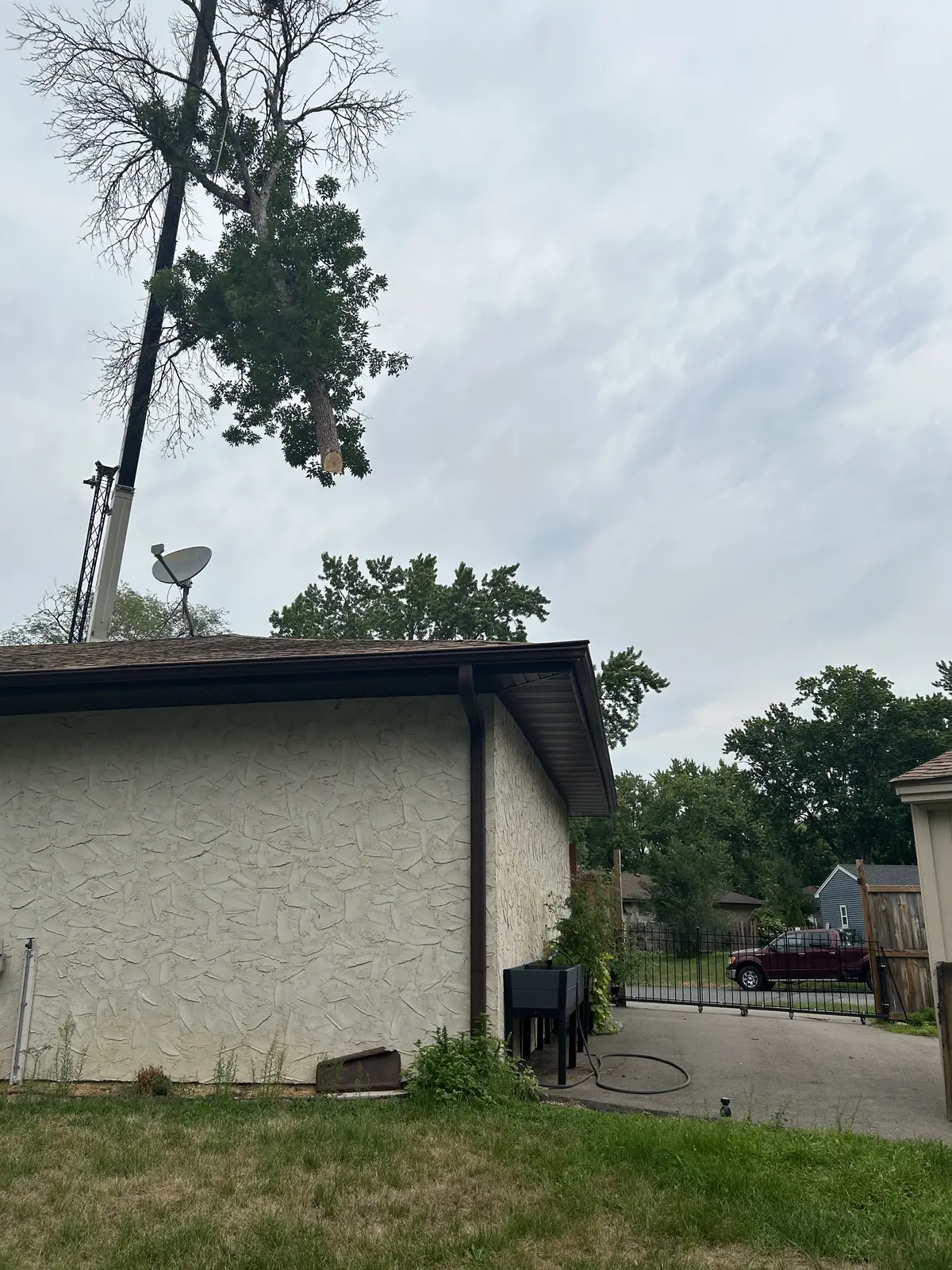
Arborist rigging a log section to a crane during a tree removal next to a Twin Cities rooftop.
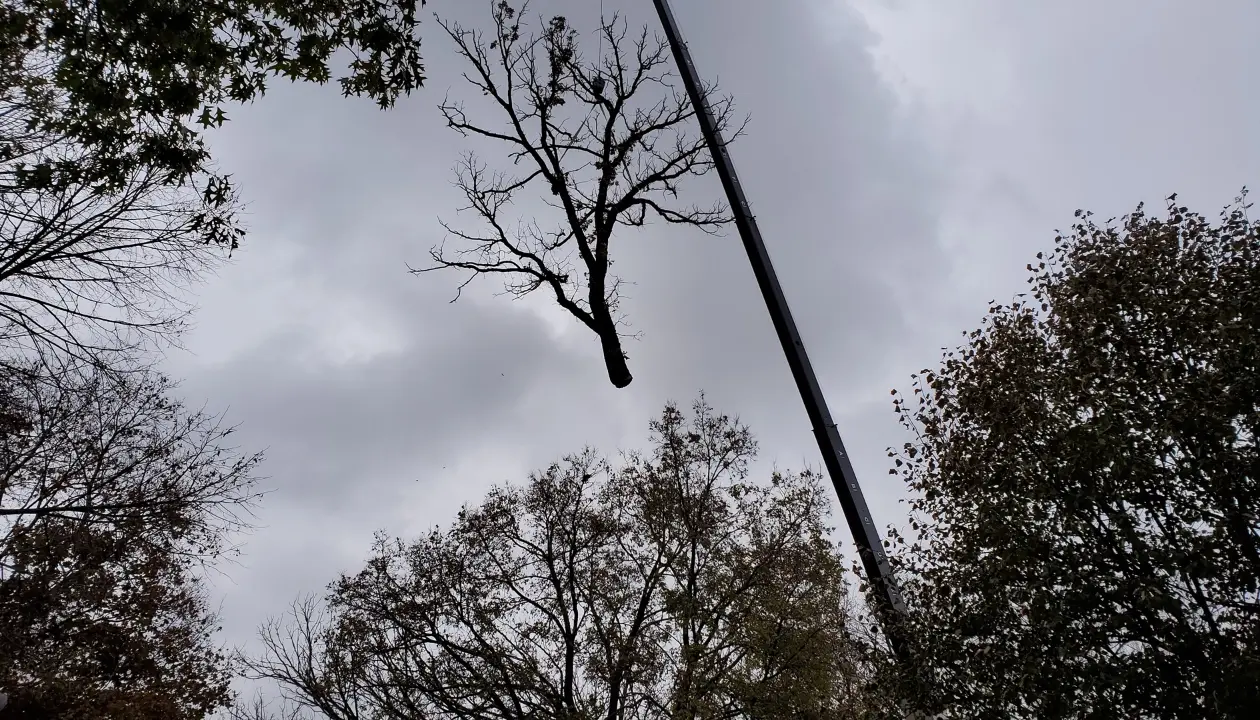
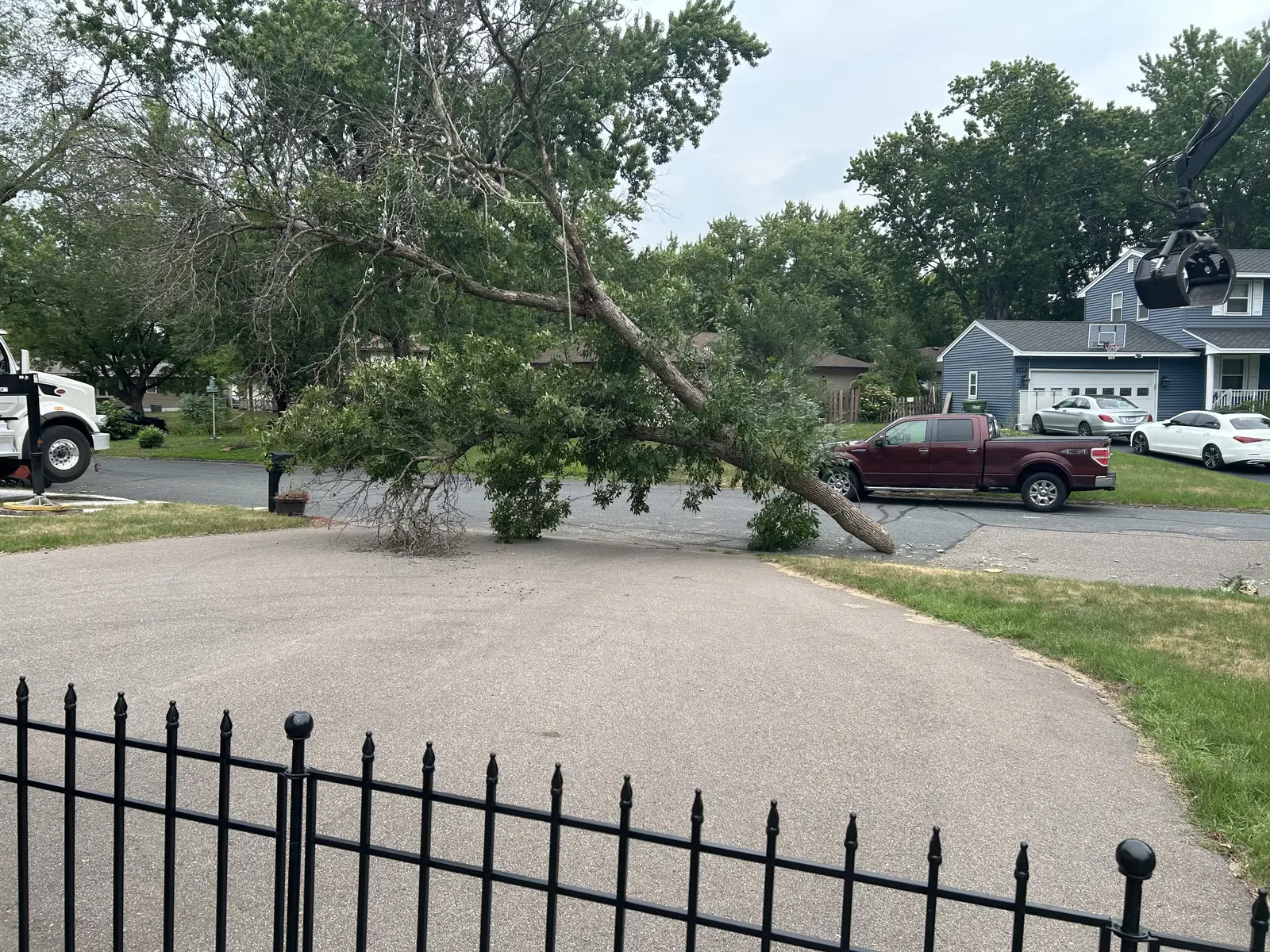
Large crane boom extended high into a tall tree with ground crew spotting from a residential street
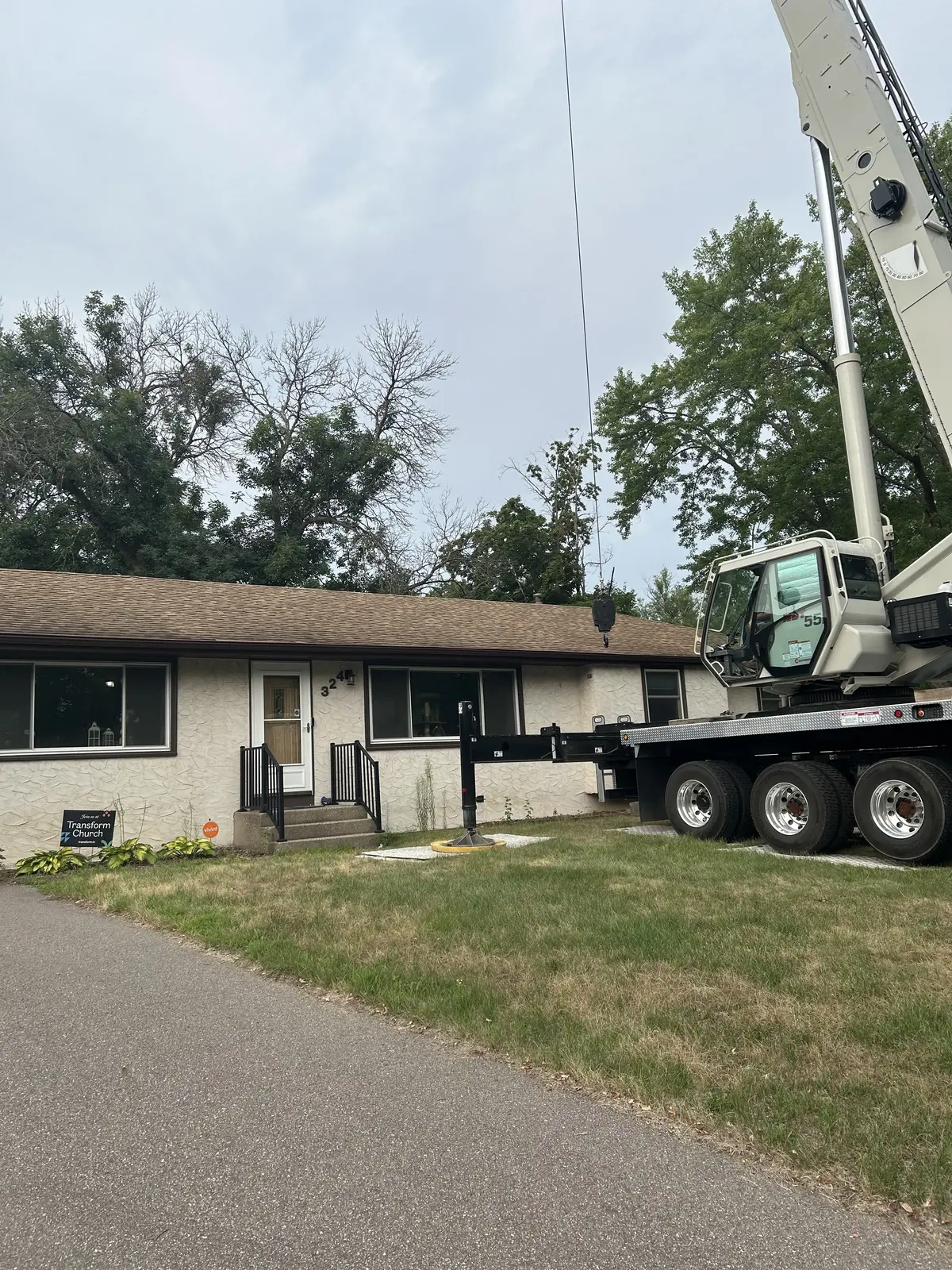
A large National Crane boom truck set up on outriggers for a residential tree removal

The hidden cost a crane removes: your lawn


There’s a cost to manual removal that never shows up on the estimate — what we call level of impact. When heavy logs get dragged across your yard, your turf pays for it. Refilling ruts, replacing sod, and regrowing grass isn’t free, and it isn’t quick. You paid to have that landscape; doing the removal the hard way quietly destroys part of it.

A crane sets every section down in the street or a designated drop zone, so nothing lands on — or gets dragged across — your landscaping. You get a cleaner site, far less sawdust, and a higher-quality finish, because the tree never has to be wrestled out across your property.

When a crane isn't optional.


Sometimes a crane isn’t about saving money — it’s about not getting someone hurt.

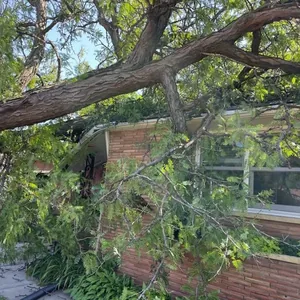
Large dead or dangerous trees are the clearest case. Emerald Ash Borer-killed ash trees turn brittle within a couple of years, and storm-split trunks are unpredictable. You can’t safely climb or push a compromised tree — it can come down on its own during the work. So instead of putting a person in it, we pick it with the boom truck.

On those jobs, we won’t offer you the cheaper, riskier route, even if you ask. It’s not worth your property or our crew. That’s the one situation where a crane can be the most expensive option and still the only one we’ll do.

What crane removal costs in the Twin Cities .

Every job is different, but here’s an honest range to set expectations:

  • Low end — around $3,200. One straightforward tree, nothing huge, removed by crane.
  • The 90% band — $3,200 to $8,500. Where most of our crane jobs land.
  • $15,000+ for the largest trees, multiple-tree jobs, or hard-to-reach sites that need bigger equipment, more reach, and more time.
an image showing this text in a sliding bar:Under $3,200 Smaller removals — no crane needed Where 90% of jobs land $3,200–$8,500 $3,200 Low end $8,500 Top of the common band $15,000+ Largest / hardest Under $3,200 No crane Smaller removals that don't need a crane — handled with standard climbing and rigging. The 90% band $3,200–$8,500 Where most of our crane jobs land — typical size, access, and cleanup. High end $15,000+ Largest trees, multiple-tree jobs, or hard-to-reach sites needing bigger equipment, more reach, and more time.

What drives the price​ and Why

  • Tree size & weight – Height, trunk diameter, and total tonnage set the baseline.
  • Equipment size & reach – Bigger boom trucks and longer reaches cost more per hour.
  • Access & distance – Where the equipment can set up, and how far it has to reach over obstacles.
  • Structures & power lines – More obstacles mean more rigging, planning, and time.
  • Cleanup & stumps – Hauling, chipping, and optional stump grinding.
 

We give you a clear, itemized estimate up front — no surprises. We’re not the cheapest tree company in the Twin Cities, and on a crane job, “cheapest” almost always means someone’s cutting corners on safety or your property.

See how we price removals →

How a crane removal works, step by step .

  1. Assessment. A certified arborist evaluates the tree, the structures around it, power lines, and setup options, then builds the removal plan.
  2. Property protection. Before anything moves, we lay ground mats and plywood and map the equipment path. Your lawn, driveway, and landscaping are protected.
  3. Rigging. A climber (or aerial lift) sections the tree and rigs each piece to the crane before the cut is finished.
  4. Lift and place. The operator, guided by the arborist, lifts each section up and over obstacles and sets it down in a clear processing zone.
  5. Cleanup. We chip, haul, and clean the site, and can grind the stump as a quick follow-up. We leave your property cleaner than we found it.

We also coordinate directly with utilities and municipalities when a job needs permits or line clearance.

Why homeowners trust Urban Tree for crane work.

Crane removal is precision work, and it shows in who does it. Our removals are led by an ISA Certified Arborist — not a crew with a chainsaw and confidence. 4.9 stars across 110+ reviews, built on the tight, complicated jobs other companies pass on.

We also coordinate directly with utilities and municipalities when a job needs permits or line clearance.

The only way someone beats a crane on price is a couple of young guys with a truck and trailer hauling everything out by hand. No overhead — but a real, unaccounted cost in safety, wear, and the shortcuts that come with it. That’s not who we are, and it’s not who our clients are.

“We had an enormous silver maple removed via crane assist and then the stump ground down. The street was marked off ahead of time so neighbors knew where not to park… On the day of the removal, the team was incredible to watch — the ease and artistry with which they took out our tree was amazing. They cleaned up the yard and street not only at the end, but along the way.” — Toni C., Twin Cities homeowner

“Urban Tree did an absolutely amazing job removing 19 dead ash trees today. It was like choreography watching them work.” — Patti

Frequently asked questions

How much does crane tree removal cost in the Twin Cities? Most crane removals run from about $3,200 to $15,000+, with roughly 90% of our jobs landing between $3,200 and $8,500. Price depends on tree size, equipment and reach, access, and how close the tree is to structures or power lines. You get an itemized estimate before any work starts.

Doesn’t a crane cost more than regular removal? Usually it costs less. A crane does in a fraction of the time what a crew would otherwise do by hand, log by log, and it spares your lawn from damage. Our crane jobs save the average customer $2,000 or more versus doing it the hard way.

Will a crane show up, or a boom truck? For most jobs, a 45-, 55-, or 60-ton boom truck — a self-contained truck that’s set up and working in about 15–20 minutes. We bring in a larger street-set crane for the biggest jobs.

Can you remove a tree hanging over my house? Yes — that’s one of the most common reasons we use a crane. We lift sections up and away from your roof instead of dropping them toward it.

Do I need a crane to remove a dead ash tree? Often, yes. Emerald Ash Borer makes ash brittle and unpredictable within a couple of years, so we pick the tree with a crane rather than put a climber in something that can’t be safely climbed.

Will a crane tear up my yard? The opposite. Pieces are set down in the street or a clear drop zone rather than dragged across your turf, so your landscaping comes through the job intact.

Do you handle permits and power-line coordination? Yes. We coordinate with utilities and municipalities when a job requires permits or line clearance.

How long does a crane removal take? Most are done in a day. Larger or multi-tree jobs may run longer, with stump grinding scheduled as a quick follow-up.

Crane Tree Removal in Minneapolis, St. Paul & the North Metro

From our home base in Maple Grove, Urban Tree provides crane-assisted tree removal throughout Minneapolis, St. Paul, and communities across the north and northwest Twin Cities metro:

  • Northwest metro: Maple Grove, Plymouth, Brooklyn Park, Brooklyn Center, Champlin, Osseo, Dayton, Rogers, Corcoran, Crystal, New Hope, and Robbinsdale
  • North metro (Anoka County): Coon Rapids, Blaine, Andover, Anoka, Ramsey, Fridley, Spring Lake Park, Columbia Heights, and Ham Lake
  • Northeast metro: Mounds View, New Brighton, Shoreview, Arden Hills, and Roseville
  • West metro: Golden Valley, St. Louis Park, Minnetonka, Edina, and Wayzata
 

If your tree is in the greater Twin Cities metro and it’s too big or too tight for a standard removal, give us a call at (612) 532-9996 — odds are we’re already working nearby.