
Tree on your house, blocking the driveway, or into power lines? Call 612-532-9996 now. · Live answering · Same-day emergency response
Home › Stump Grinding
ISA CERTIFIED ARBORISTS · MAPLE GROVE · MPLS · SINCE 2006
Grinding is not removal. We will tell you the difference before you book.
A grinder takes the stump and the top of the root flare. The lateral roots stay in the ground and rot over the next few years. For most yards that is exactly right and you should not pay for more. If you are replanting a tree in that spot or building on it, it is not enough, and you deserve to hear that before the invoice rather than after.
Free estimates. Licensed and insured. 4.8 stars across 133 Google reviews.
You’ll speak with our scheduling team, who will arrange a visit from a certified arborist, not a salesperson.
Send a photo with something for scale next to it and we will price it. Most stump jobs can be quoted without a site visit.
ISA Certified Arborist · TCIA Member · MN Tree Care Registry #20190969 · ★ 4.8 stars across 133 Google reviews · Licensed and insured · Serving the Twin Cities since 2006
The Word Everyone Gets Wrong
Search stump grinding in this market and nearly every company promises “complete stump removal.” It is a comfortable phrase and it is not what happens.
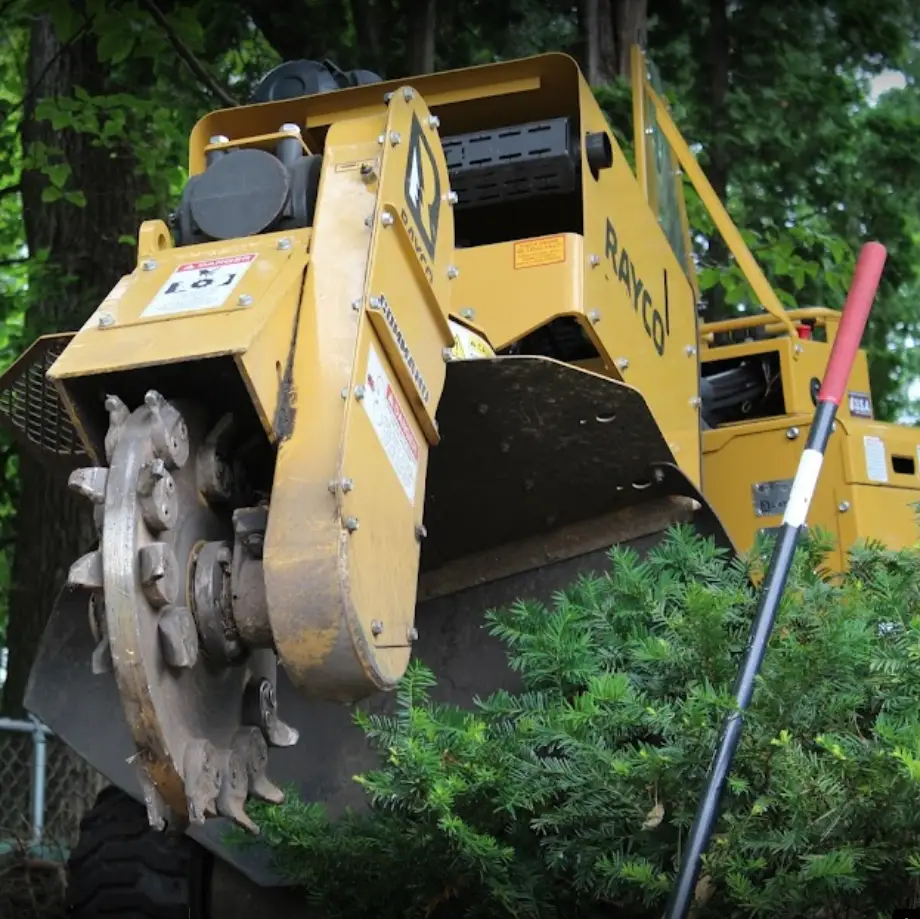
A stump grinder is a wheel with carbide teeth that chews the stump down in horizontal passes. It takes the visible stump and the top of the root flare, and it turns them into a pile of chips and soil. It does not pull anything out of the ground. The lateral roots stay where they are and decay over the next several years.
For most yards that is exactly the right job. The stump is gone, the lawn goes back, nobody trips over anything, and the roots quietly compost underground where they bother no one. Paying more than that would be a waste.
It matters in three cases, and this is the part nobody mentions until afterwards: planting a new tree in the same spot, pouring concrete or setting a fence post or laying a patio there, and regrading the area.
In any of those, grinding alone does not get you where you are going, and a company that says “complete removal” has set you up for a surprise. Full extraction is a different job with different equipment and a much bigger hole, and sometimes the better answer is simply to plant three feet to the left.
We will tell you which situation you are in before you book, including when the answer is that you do not need us.
★★★★★
“He was also transparent with me about not spending another dime on one of my trees that appeared stressed and giving it a few years before deciding what to do with it, saving me from doing unnecessary or even harmful work on that tree.”
Courtney Barton · Google review
The Specification
Depth is the one number that decides whether this job worked, and almost nobody publishes it. It is not one number, because it depends entirely on what happens in that spot afterwards.
Working depth
4 to 6 inches below grade
Why
Enough to get topsoil and sod or seed over it. Deeper is wasted money
Working depth
8 to 12 inches below grade
Why
Shallow-rooted plants need real soil, not a chip pocket
Working depth
18 inches or more, and wider than the stump
Why
And even then, the honest answer is usually to plant three to six feet away instead. See the next section
Working depth
Deeper, and the laterals matter
Why
This is where grinding alone often is not the answer. Ask before you book
These are the depths standard practice calls for. We confirm the number for your stump at the estimate, before the machine starts.
Surface roots are a separate decision. The big roots radiating out from the trunk can be ground too, and on a mature maple or ash that can double the work. If they are in your lawn or your mower path, say so at the estimate, because it changes the price and it is much cheaper to do at the same visit than to come back for.
The Part Nobody Explains
This is the most searched and least answered question about this service, so here is the whole thing plainly.
You get a pile of chips, and it is bigger than you expect. Grinding turns solid wood into loose chips mixed with soil, and loose chips take up far more room than the stump did. A 24-inch stump produces a genuinely surprising mound.
You choose what happens to it. Two options, both fine, and you should be asked rather than told.
Do not plant a tree directly into fresh grindings. As the wood decays it pulls nitrogen out of the soil around it, and a new tree planted into that pocket will sit there looking miserable for two or three years. If you are replanting, the chips have to come out and real soil goes in. Better still, plant a few feet away and let the old spot compost.
The chips are good mulch, just not there. Spread around established trees and shrubs, away from the trunks, they are perfectly useful. They are only a problem in the hole they came from.
The roots stay. They decay on their own over several years. You may see the ground settle slightly over that spot, and usually a ring of mushrooms there is just the roots breaking down. One exception worth knowing: if the mushrooms are honey-colored and grow in tight clusters, and especially if a nearby tree is thinning at the same time, send us a photo. That can be Armillaria, which travels through the soil to healthy roots. If suckers come up from the roots of a maple, elm or willow, mowing them takes care of it.
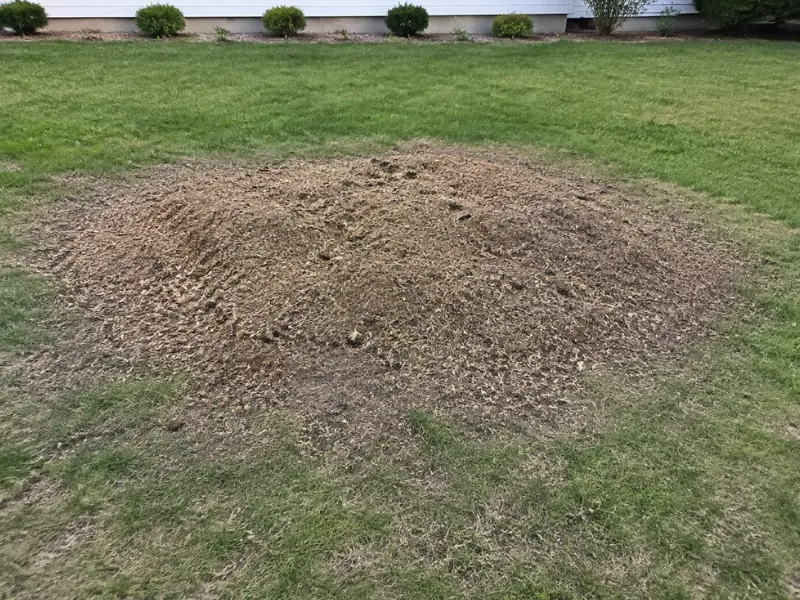
This is what a ground stump actually looks like when Urban Tree drives away: a mound of chips and soil sitting proud of the lawn. Chips take up more room than the wood did, so you get a hill if we leave them.
Ask Every Company This
A tree removal quote and a stump grinding quote are two different jobs, often on two different days, sometimes with two different crews. Whether the stump grinding is in the quote you were given is the most common billing surprise in this trade, and it is entirely avoidable by asking one question before you sign anything.
Ask it exactly like this:
“Does this price include grinding the stump, and to what depth?”
If the answer is vague, get it in writing. If the answer is that the stump is separate, that is a perfectly honest answer and you now know the real total.
There is a practical reason the two are often split. A removal crew arrives with a bucket truck or a crane and a chipper. A grinder is a different machine that has to be trailered in, has to sit there until everyone else is done, and then keep sitting there when everyone else is ready to leave. Except for unique situations, it comes on a separate visit.
Before Anything Gets Ground
A stump grinder is the only tree service that cuts several inches into the ground, and stumps have a habit of being near exactly the things you do not want cut.
Irrigation lines and sprinkler heads. The single most common casualty. They are shallow, they are unmarked, and they are frequently routed around trees.
Invisible fence wire. Usually buried an inch or two down, often looped around the yard’s perimeter and past the tree.
Landscape lighting cable and downspout drain tile. Both shallow, both invisible, both easy to cut.
Gas, electric, cable and fiber. These are why the state runs a free locate service.
In Minnesota a locate is required by law before any machine disturbs the soil, and it is free. The service is Gopher State One Call. Utility owners mark their lines up to your meter, which means the marking often runs well onto your property rather than stopping at the curb. The ticket takes two business days, so this is something to mention when you book rather than on the morning of.
What the locate does not cover is anything you installed yourself past the meter, which is precisely the irrigation, invisible fence and landscape lighting above. Those you have to know about, or point out at the estimate.
Tell us what is out there when we look at the stump. It costs nothing to route around a sprinkler line and it costs real money to repair one.
The Practical Question
Modern stump grinders fit where they need to go. The price is determined by how long the job will take.
The gate is the usual constraint. Measure the narrowest point on the route to the stump, post to post with the gate open, and tell us that number. It is the single most useful thing you can put in an estimate request. Narrow-access grinders run about 34 to 36 inches wide, so a gate described as 36 inches is genuinely marginal once the frame, hinges and latch are in the opening. The clear measurement is the one that matters.
Other things worth mentioning up front: a slope steep enough that a machine has to work across it, soft ground or a wet spring, a septic field or drain field on the route, and anything on the way in that you would rather not have tracked over.
None of this is a problem. All of it is a surprise if nobody says it. A photograph of the route from the street or driveway to the stump answers most of it in one shot.

What Drives the Price
We publish removal pricing on our tree removal page because a removal can be priced from size and access. Stumps price differently, and mostly on things you can see.
Stump grinding is priced by how wide the stump is across the cut, measured at ground level. Height above ground barely matters.
A second and third stump on the same visit cost far less than the first, because most of the cost of stump one is getting the machine there.
Gate width, distance from the driveway, slope, and whether the route is soft. See the access section above.
A lawn-depth grind and a plantable hole are different jobs.
Leaving them is cheapest. Hauling them out and backfilling with topsoil is not.
Stumps in old fence lines and boulevards collect gravel, wire and the occasional nail, all of which are hard on carbide teeth.
★★★★★
“They raked up all the debris and even took leaf blowers to fluff up the grass. Seriously!”
Jeff Matthies · Google review
★★★★★
“They left our yard in better condition than it was before the project started.”
Mike Anderson · Google review
★★★★★
“He was also transparent with me about not spending another dime on one of my trees that appeared stressed…”
Courtney Barton · Google review
Read all 133 Google reviews
Four to six inches below grade for lawn, eight to twelve for a garden bed, and eighteen or more if you insist on planting a tree in that exact spot, though planting a few feet away is usually the better answer. We tell you the number before we start rather than after. Ask for it, from us or from anyone else.
No, and that is what grinding is. The stump and the top of the root flare are ground up. The lateral roots stay in the ground and decay over the next several years. If you need them gone, that is a different job and we will tell you so.
Your choice. They can go back in the hole, mounded slightly because they settle, or we haul them out and backfill with topsoil. Leaving them is cheaper. Hauling them is right if you are planting or seeding soon.
Not directly into the grindings. Decaying wood chips tie up nitrogen and a new tree planted into that pocket struggles for years. Either have the chips removed and real soil brought in, or plant a few feet to the side and let the old spot compost, which is usually the better answer anyway.
Often, and the way to be certain is to measure the clear opening at the narrowest point on the route, post to post with the gate open, and tell us that number. Narrow-access grinders are about 34 to 36 inches wide, so a gate called 36 inches is marginal once the hardware is in it. Smaller machines work more slowly, which shows up in the price, but it means nothing has to come apart.
Ask us directly and get it in writing, and ask every other company the same thing before you sign. Removal and grinding are two jobs and often two visits. It is the most common billing surprise in this trade and one question prevents it.
Tell us where they are at the estimate. The state locate service marks public utilities for free, but it does not cover anything installed privately on your side of the meter, which is exactly what irrigation, invisible fence and landscape lighting are. We route around what we know about.
Usually the roots decaying underground, which is normal and temporary. The ground may also settle slightly over that spot, which a little topsoil fixes. The one exception: honey-colored mushrooms in tight clusters can be Armillaria root rot, which spreads through the soil to healthy roots. If you are seeing that, and especially if a nearby tree is thinning, send us a photo.
No. If it is out of the way, not in a mowing path, and not a tripping hazard, a stump can sit there and rot on its own. If that is your situation we will tell you, the same way we would about any other work you do not need.
Before you remove it, whether the tree can be saved is worth an arborist’s opinion.
Structural pruning, and why we will not top your tree.
Put something next to it for scale, a shoe or a coffee cup, and tell us the narrowest gate on the way in. Most stump jobs can be quoted from that without anyone coming out.
Loading the form…
One question first: how deep, and what happens to the chips?
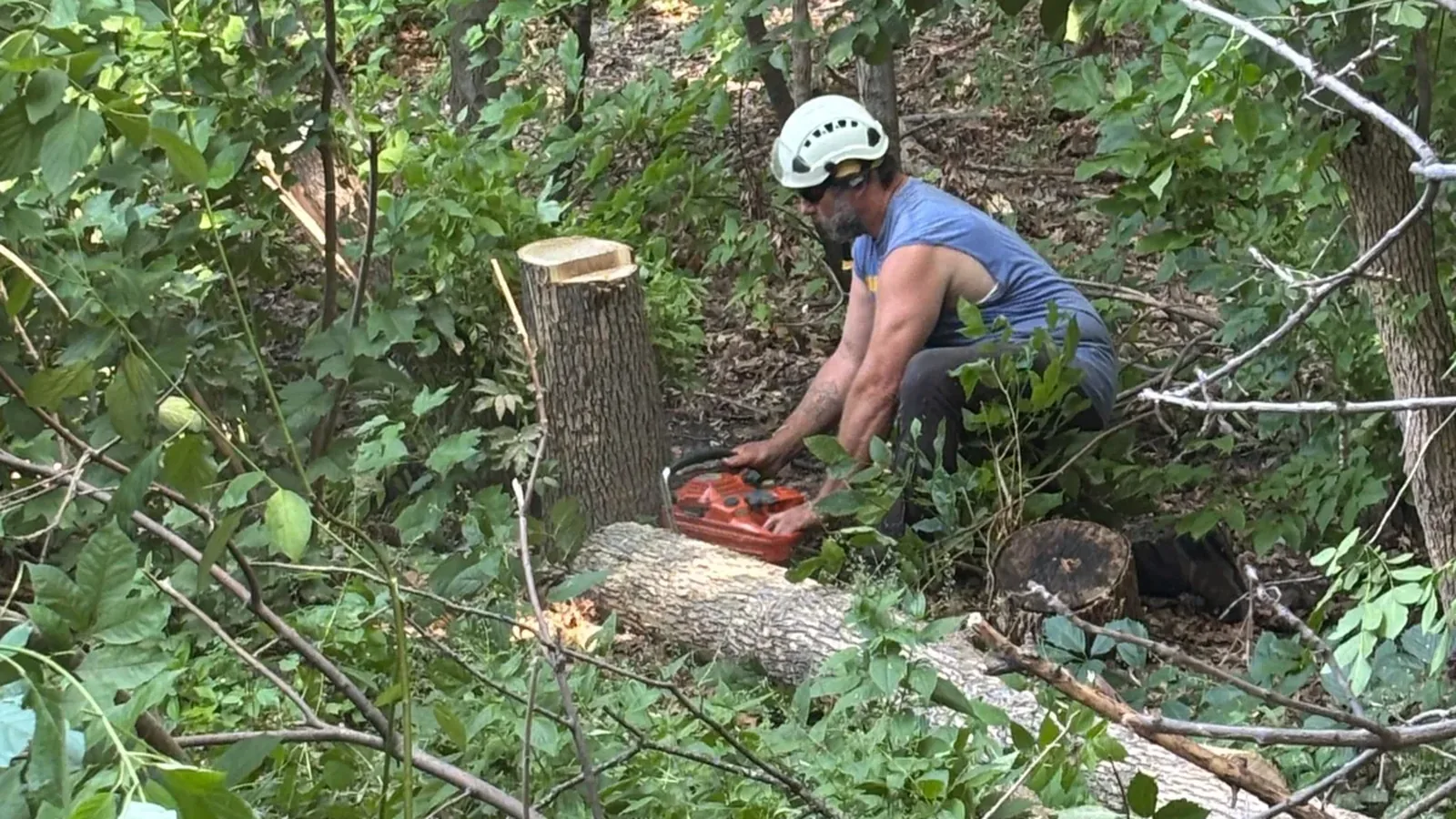
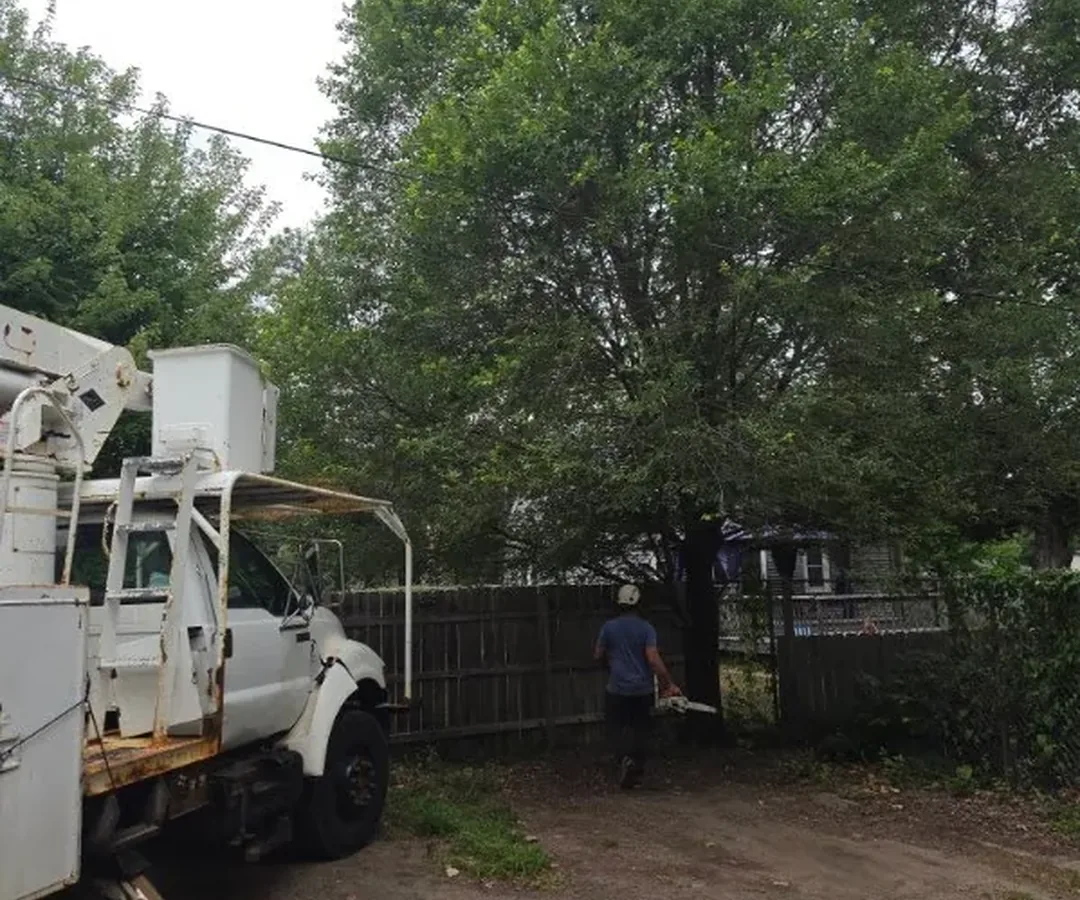
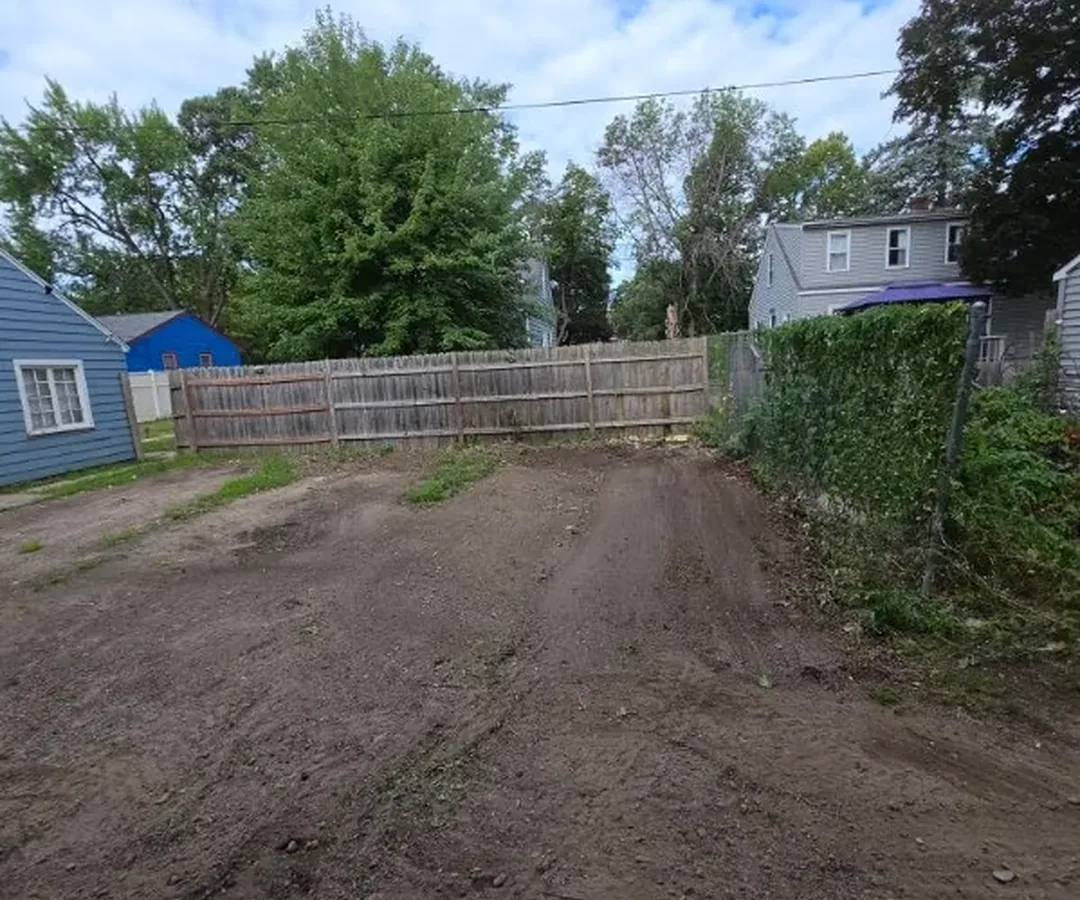
Grinding is not the same job as removal, and the difference shows up in the ground. Left to right: the stump a removal leaves behind, the grinder working through a standard side gate, and the spot ground below grade, raked and graded so it can be seeded or sodded. Access is what moves the price more than stump size does.
Loading the estimate form…